 Coreia do Sul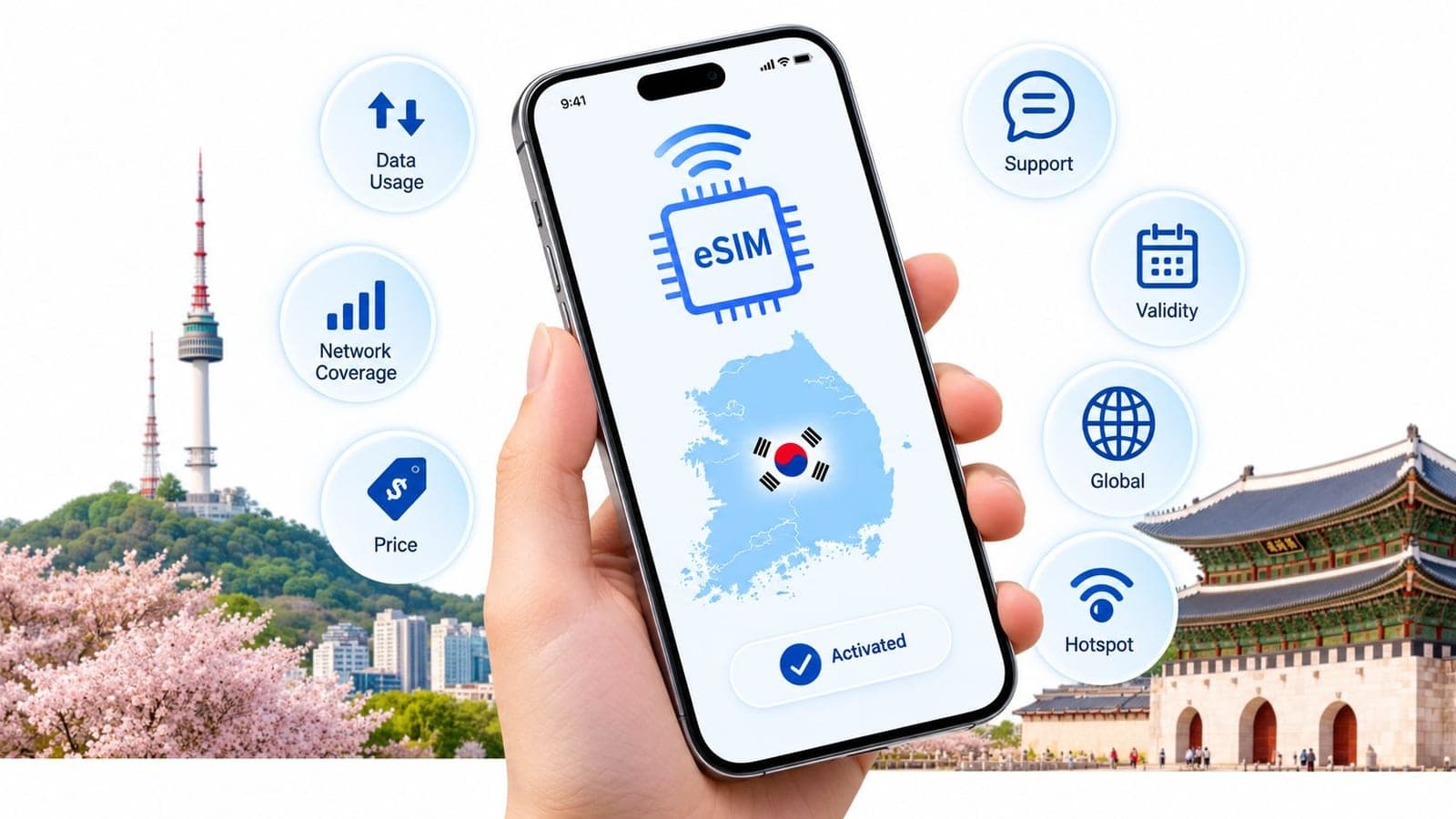
Landing in Seoul without mobile data turns simple tasks into immediate friction. A traveler needs maps, translation, messaging, transport information, and booking access before leaving the airport, not after finding a shop or reliable Wi-Fi. South Korea is highly connected, with 4G coverage estimated at 100% and 5G reaching more than 90% of the population, so the key question isn't whether a phone can connect. It's which plan delivers the right data allowance, activation method, hotspot policy, country coverage, and support. Lonely Planet's South Korea connectivity guide identifies KT, LG U+, and SK Telecom as the country's main networks.
The best eSIM for Korea depends on trip length, expected usage, tethering needs, and whether Korea is one stop in a wider itinerary. RedSim is the strongest all-around choice for travelers who want country, regional, or global coverage, quick setup, hotspot sharing, top-ups, usage tracking, and responsive support. The options below match seven providers to specific travel situations, including short stays, heavy data use, capped budgets, laptop tethering, and multi-country trips.
1. RedSim
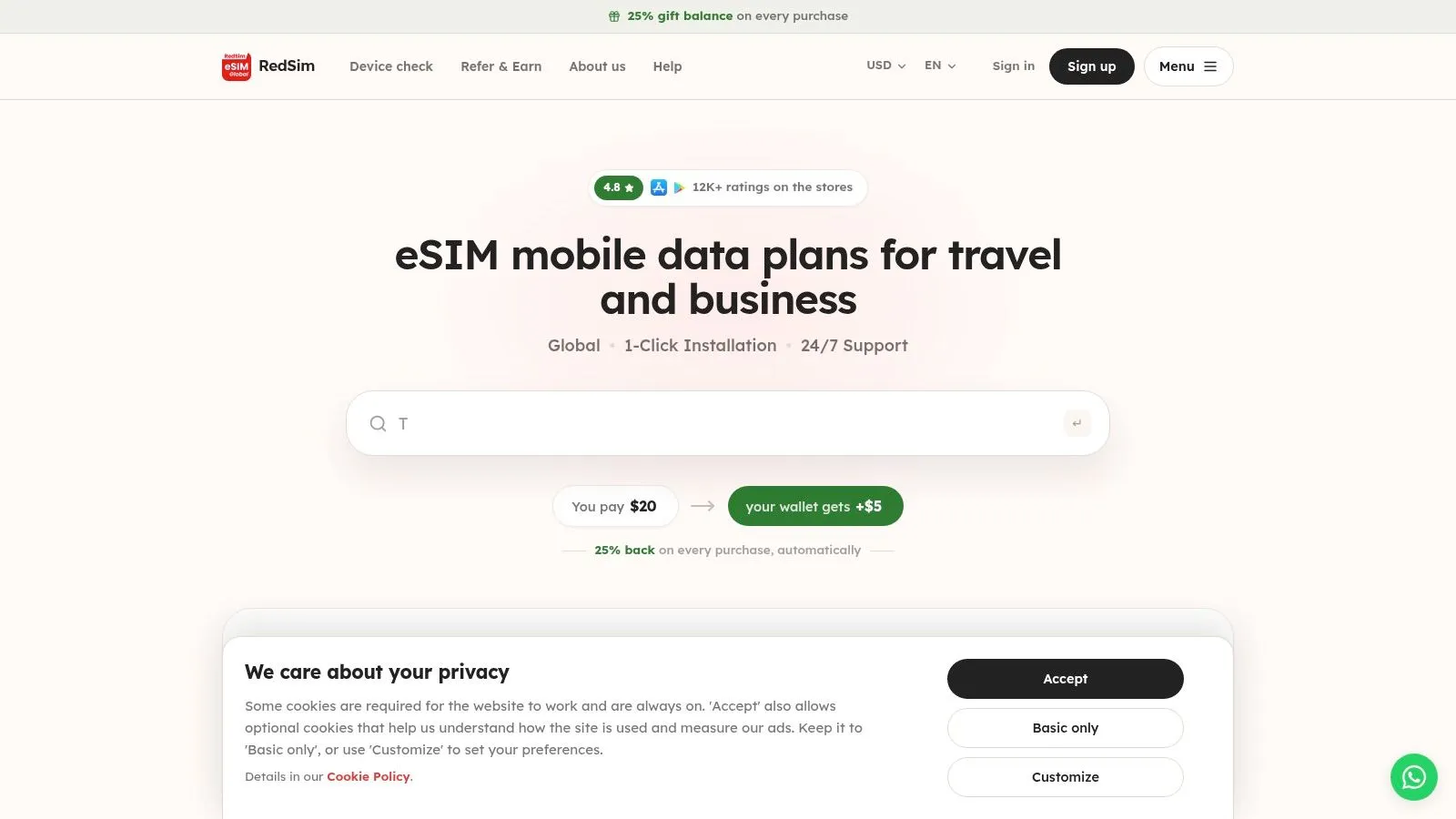
RedSim fits travelers who want to sort data before landing in Korea and keep options open after arrival. It offers country, regional, and global eSIM plans across 200+ destinations, so a traveler can buy South Korea coverage for one trip or choose a wider plan for an Asia itinerary. RedSim's travel eSIM service sends a QR code by email and also supports one-click installation through its iOS and Android apps.
The setup flow is built for fast pre-departure activation. A compatible phone can be connected in about two minutes through the app, while QR installation gives you a simple backup. Before buying, confirm that the phone supports eSIM and is free of carrier locks with RedSim's compatible-device guidance.
Why RedSim suits flexible travelers
RedSim makes sense for business travelers, families, digital nomads, and anyone whose schedule may change. Active eSIMs can be topped up in the app without generating a new QR code, and usage tracking helps stop a plan from running dry at the wrong time. Hotspot sharing is available too, so a laptop, tablet, or companion phone can use the same connection.
The value is not just the first data package. RedSim adds 25% of every purchase to the account wallet, and unused eSIMs that have not been installed or activated qualify for a full refund. Refunds typically return to the card within 5 to 10 business days, according to RedSim's refund policy. Customer support runs 24/7 through WhatsApp and email, with typical replies around two minutes, and the service reports 12K+ store ratings averaging approximately 4.8. Those figures and the refund terms are listed in RedSim's service information.
Practical rule: Choose RedSim when Korea may turn into a regional trip, when hotspot sharing matters, or when you want the option to add data without reinstalling an eSIM.
RedSim is data-only. Calls and SMS stay on the traveler's physical SIM, and the phone must support eSIM technology. Heavy data users should compare the plan limits carefully, and travelers heading beyond major cities should check coverage details before relying on it in remote areas.
Best for: Flexible country, regional, or global coverage, hotspot sharing, families, business travel, and travelers who value support and refundable unactivated plans.
2. Nomad
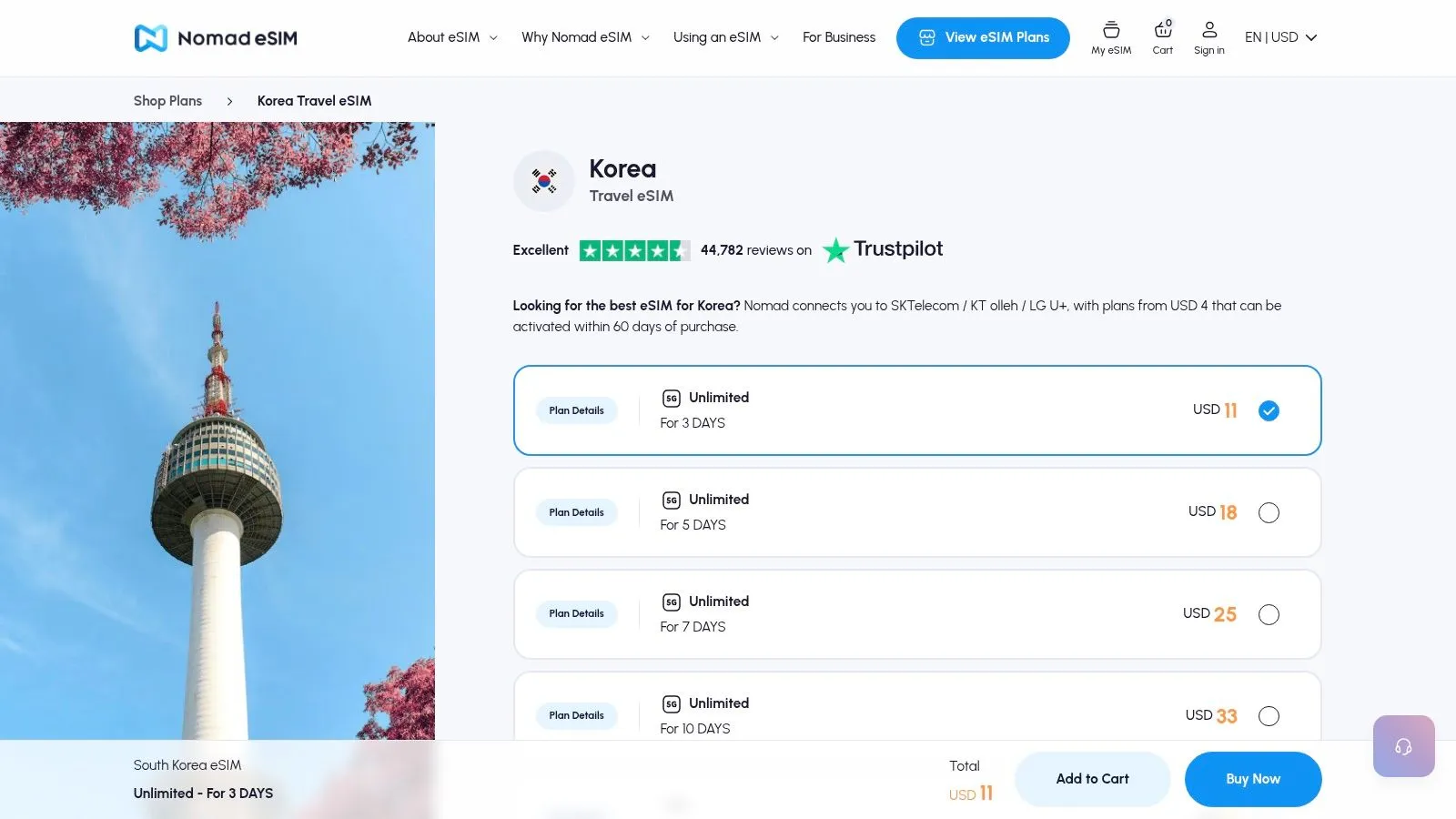
Nomad is the clearest fit for travelers who want a Korea plan with both fixed-data and short-duration unlimited choices. Its South Korea catalog includes plans for trips lasting from 7 to 30 days, along with regional Asia-Pacific and China-Japan-Korea bundles. That makes Nomad practical for an itinerary that combines Seoul with Tokyo or another nearby destination.
The provider focuses on app-based purchasing, installation, plan management, and mid-trip data additions. Fixed-data tiers suit travelers who mainly need navigation, translation, messaging, restaurant searches, and occasional media. A traveler with more intensive daily usage can instead choose a time-boxed unlimited plan.
The trade-off between price and disclosure
Nomad is attractive for small and medium data requirements because its fixed-data catalog makes it easier to pay for a defined allowance rather than an unlimited label. Regional bundles can also remove the need to install separate eSIMs when the itinerary crosses borders. The Nomad South Korea eSIM page provides the current plan choices and activation details.
The limitation is that unlimited plans are time-boxed rather than designed as long monthly unlimited service. Network details can also vary by plan and may not be fully visible before purchase. Travelers who care about local routing should inspect the specific plan rather than assuming every Nomad option uses the same network arrangement.
Nomad is also a useful comparison point for travelers evaluating alternatives. The Nomad comparison page helps frame the decision around data allowance, trip length, and the difference between local and regional coverage.
Best for: Small-to-medium data use, clearly defined trip dates, and travelers moving between Korea, Japan, and China.
3. Airalo
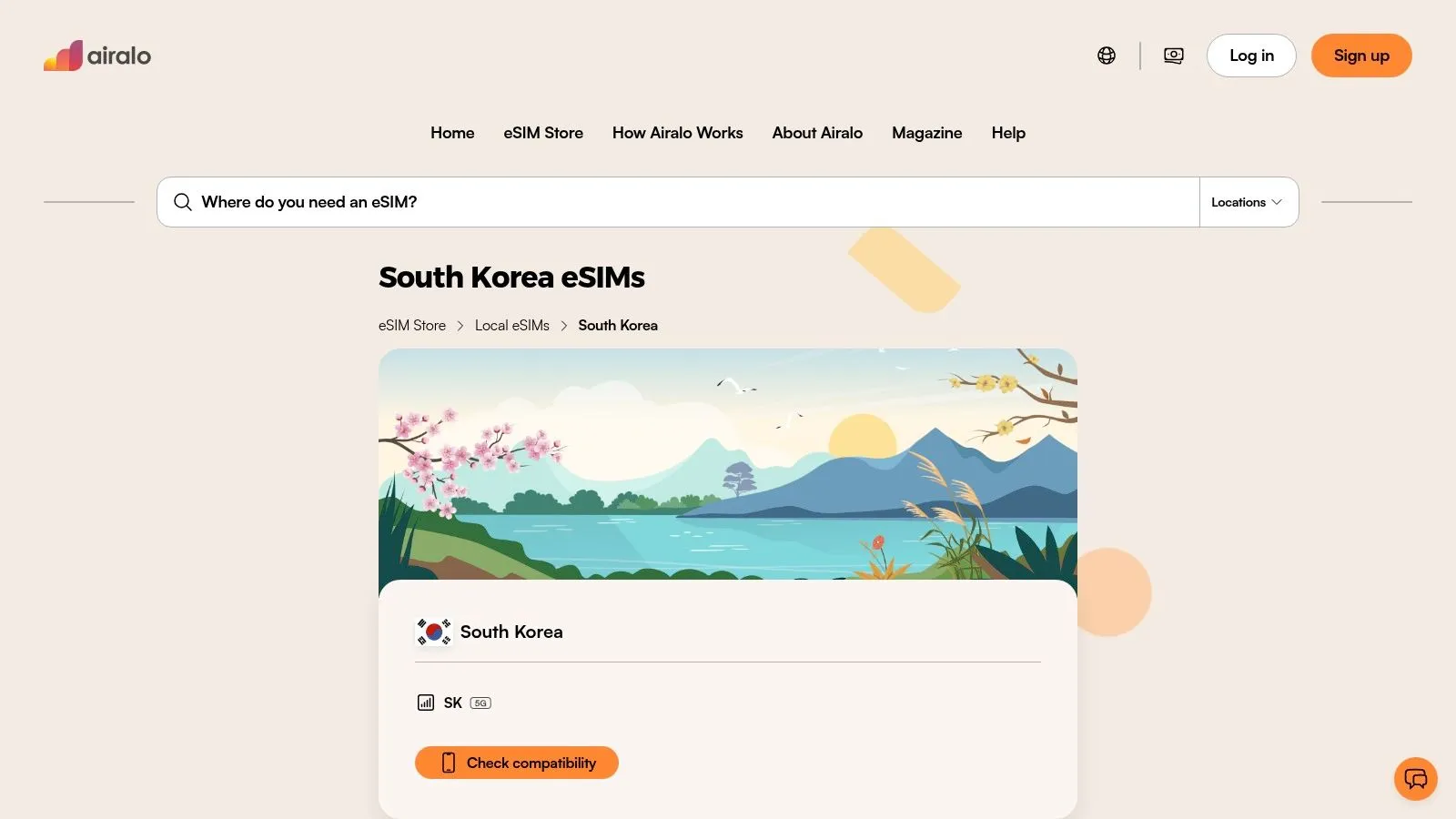
For a short Seoul trip, Airalo is the easiest starting point for first-time eSIM buyers. Its Korean catalog covers fixed-data plans, larger allowances including 50 GB, and an Unlimited segment. The Airalo South Korea eSIM page lists current options and says its service includes 24/7 multilingual support, including WhatsApp channels.
Airalo's main strength is choice. A budget traveler using maps, translation, messaging, and restaurant searches can select a smaller fixed-data pack. Travelers expecting frequent video calls, media uploads, or heavy navigation can choose a larger allowance instead. That range makes Airalo more suitable for varied daily usage than a provider focused on one plan style.
A polished option with a pricing caveat
The app is the clearest reason to choose Airalo. Travelers can purchase, install, manage, and top up without changing a physical SIM, and some plans support renewals. The broad catalog also suits people who visit several countries during the year and prefer managing regional connectivity in one place.
The trade-off is value at higher usage levels. Specialized providers or local Korean tourist eSIMs may offer better pricing for heavy data users, so a recognizable brand should not decide the purchase. Check the checkout currency and total before paying, since regional displays can vary.
Airalo fits travelers who prioritize an easy app workflow over the lowest possible price. Compare RedSim's South Korea eSIM options if price, allowance, or trip length matters more than marketplace convenience.
Best for: First-time eSIM users, short trips, in-app top-ups, and travelers who want a broad, polished marketplace.
4. Holafly
Holafly is the direct recommendation for travelers who use a lot of data every day and don't want to monitor a fixed allowance. The provider sells day-based unlimited data plans for Korea, with durations from 3 to 30 days, and identifies SK Telecom and LG U+ as network partners. Installation works through a QR code or app, and support is available around the clock.
This model suits travelers who upload photos constantly, stream during long journeys, make frequent video calls, or use mobile data as the main connection throughout the day. Instead of calculating whether a fixed pack will last, the traveler chooses the number of days and keeps the connection active for the trip.
Unlimited doesn't mean unrestricted
Holafly's simplicity comes with important conditions. Unlimited plans generally include fair-use thresholds, and hotspot sharing may be limited. That matters if a traveler expects to tether a laptop for work or share a connection with several family members. A fixed-data plan can cost less for a traveler who mostly uses messaging, maps, translation, and light browsing.
The provider's named Korean networks make the plan easier to evaluate, especially for travelers visiting Seoul, Busan, or other populated areas. Travelers should still read the current fair-use and tethering terms before purchase rather than treating unlimited as unrestricted high-speed service. Current plan details appear on Holafly's Korea eSIM page.
Holafly is a better choice than a capped plan when daily data use is hard to predict. It isn't the best value for modest users, and a traveler who needs to extend dates or add a separate data allowance should check the provider's current policy first. RedSim's Holafly comparison offers another way to compare the trade-offs.
Best for: Heavy daily data use, streaming, frequent uploads, and travelers who prioritize predictable unlimited-style access.
5. Ubigi
Ubigi suits travelers who want a straightforward app, hotspot support, and a balanced short-term unlimited option. Its Korea catalog includes country-specific fixed-data plans and unlimited day bundles, including a 7-day unlimited option. Plans arrive by email with a QR code, while the app handles installation, management, and recharges.
The provider is appealing for a traveler who wants more than a basic capped pack but doesn't need the broad regional flexibility of a global plan. Hotspot and tethering support make Ubigi useful for a laptop, tablet, or second phone, provided the selected plan's fair-use terms fit the intended workload.
A practical middle ground
Ubigi's main strength is a clean purchase and activation process. The service avoids the complexity of a huge plan catalog while still giving travelers a choice between fixed data and a short unlimited bundle. The Ubigi mobile data service provides the current South Korea offers and recharge details.
The major limitation is the meaning of unlimited. Fair-use policies and speed management can apply, and the exact threshold varies by listing. A traveler planning to tether a work computer for long periods should review those conditions before relying on the plan. Ubigi also offers fewer granular mid-size tiers than some discount-focused providers, which can make it harder to match a very specific data budget.
Ubigi is strongest when the trip length is known and the traveler wants a simple seven-day solution. It is less compelling for a long itinerary that might change or for a light user who would pay for unused unlimited capacity.
Best for: A short trip, balanced unlimited-style use, hotspot access, and travelers who value a simple app.
6. aloSIM
aloSIM is the best fit for travelers who want a capped data plan at a low entry price and don't need unlimited service. Its South Korea catalog includes fixed-data choices such as 3 GB, 5 GB, 10 GB, and 20 GB, with validity lasting up to 30 days. Travelers can purchase before departure and activate on arrival.
This approach works well for a moderate-use trip. Maps, translation, messaging, transport apps, email, and occasional browsing usually fit more naturally into a fixed allowance than into an unlimited plan. Capping the allowance also gives travelers a clear spending limit and reduces the risk of paying for capacity that won't be used.
Simple plans for controlled usage
aloSIM keeps management intentionally uncomplicated. Installation takes approximately 90 seconds, and the traveler can prepare the eSIM in advance while still connected to home Wi-Fi. Current South Korea plan choices are listed on the aloSIM South Korea eSIM page.
The trade-off is limited flexibility for demanding users. aloSIM's Korea plans are data-only, so they don't provide a local phone number. There isn't an unlimited option for travelers who expect heavy streaming, frequent hotspot use, or sustained remote work. A traveler who runs out of data may need to purchase another plan rather than switching to an unlimited tier within the same original purchase.
aloSIM should be selected when the priority is low cost, a defined data cap, and uncomplicated activation. It isn't the right recommendation for a family sharing one connection or a digital nomad who needs a dependable work connection for the entire trip.
Best for: Budget-conscious travelers, light-to-moderate usage, and travelers who prefer fixed data over unlimited plans.
7. GigSky
GigSky is the strongest option for travelers who want one eSIM account across a complex itinerary. The service offers South Korea plans through its global app, supports 4G and 5G where available, and promotes broad multi-country and cruise coverage. A free-trial data perk on the Korea page gives travelers a way to test connectivity before committing to a paid plan.
The single-account approach helps travelers who move between regions, join a cruise, or don't want to maintain separate country profiles. GigSky also notes unlimited hotspot sharing, which makes it useful when a traveler needs to connect a laptop, tablet, or companion device.
The right choice for multi-country movement
The free trial is GigSky's clearest differentiator. A traveler can test the service before depending on it for a wider itinerary, while the app keeps purchases and coverage under one account. Details for South Korea and the wider travel footprint are available on the GigSky Korea eSIM page.
The limitation is price transparency. Final pricing and some plan terms are app-based and can vary by locale or currency. GigSky may also cost more per gigabyte than discount specialists, particularly when Korea is the only destination. Travelers with a simple Seoul trip and modest usage may get better value from a fixed-data country plan.
GigSky makes most sense when continuity across countries matters more than the lowest Korea-only price. The GigSky comparison page can help travelers assess whether a broader plan justifies the additional cost.
Best for: Multi-country itineraries, cruise travel, unlimited hotspot needs, and travelers who want a try-before-buy option.
7-Way Comparison of Best eSIMs for Korea
| Provider | Setup complexity | Device & requirements | Typical plans & pricing | Connectivity & reliability | Ideal use cases | Key advantages |
|---|---|---|---|---|---|---|
| RedSim | Instant QR or in-app 1‑click (≈2 min) | eSIM‑capable, carrier‑unlocked device; data‑only | Country/regional/global plans across 200+ destinations; low advertised prices (examples: Turkey $1.81; Italy 20GB $10.99) | Reliable local data, hotspot support, real‑time usage; refunds for unactivated eSIMs | Vacationers, business travelers, nomads, families needing instant local data | Low prices, 25% wallet credit, easy top‑ups, fast 24/7 WhatsApp support |
| Nomad | App activation; can add data mid‑trip | eSIM‑capable device | Fixed tiers (1–20+ GB) and short “unlimited” day plans (7–30 days); regional APAC bundles | Good value for small/medium data; network partner details vary by plan | Short Korea trips, APAC regional travelers seeking value | Competitive per‑GB on small/medium packs; clear catalog and regional bundles |
| Airalo | Polished app with in‑app top‑ups and renewals | eSIM‑capable device | Local Korea plans up to 50 GB plus Unlimited segment; auto‑renew options | Broad catalog and consistent UX; multi‑language 24/7 support | First‑time eSIM users and travelers wanting many options | Large selection, easy top‑ups, widely recommended for beginners |
| Holafly | Quick QR or app install | eSIM‑capable device; data‑only | Day‑based “unlimited” plans (3–30 days); networks disclosed (SKT, LG U+) | Predictable daily access; often subject to fair‑use limits for heavy tethering | Short stays wanting simple daily unlimited access | Predictable per‑day pricing, clear network disclosure, easy refunds |
| Ubigi | Instant email/QR and app setup | eSIM‑capable device; supports hotspot | Country plans including 7‑day “unlimited” and fixed options; mid‑range pricing | Straightforward activation and hotspot support; FUP may apply | Mid‑range short trips and users needing tethering | Simple purchase flow, reliable app, hotspot/tether supported |
| aloSIM | Very quick install (~90 seconds) | eSIM‑capable device; data‑only | Low‑cost fixed tiers (1–20+ GB) up to ~30 days | Basic, reliable capped data for light/moderate use | Budget‑conscious light-to-moderate users who want capped data | Very low prices on common tiers; no‑frills, simple management |
| GigSky | App-based setup with free‑trial option | eSIM‑capable device; supports unlimited hotspot | Country eSIMs in app; pricing/limits shown in app and may vary by locale | Try‑before‑you‑buy free trial; broad multi‑country/cruise coverage; pricing varies | Multi‑country travelers, cruise itineraries, users who want to test service | Free trial, wide travel footprint, strong app experience and unlimited tethering |
Install Once, Travel Connected
The best eSIM for Korea depends on the traveler's usage pattern, not on a single universal winner. A short trip with moderate data use calls for a fixed-data country plan. Heavy daily use favors a day-based unlimited option, while a laptop-heavy itinerary requires close attention to hotspot rules. Korea as one stop among several nearby countries makes a regional or global plan more practical than separate country purchases.
South Korea is also a market where network quality is rarely the only decision. The main networks are KT, LG U+, and SK Telecom, and local breakout can matter for map, taxi, and messaging performance. Independent testing reported a 35 ms response time for a local SK Telecom eSIM, compared with 110 to 500 ms for some travel eSIMs routing through Singapore or Hong Kong, making routing a relevant consideration for travelers who depend on responsive apps. The Korea eSIM latency comparison explains why low latency can matter more than headline download speed.
A second decision concerns phone numbers. Many travel eSIMs are data-only, while local Korean products can include voice and text service. LG U+ markets Korea eSIMs with data and phone or text capabilities, so travelers who need SMS verification or a Korean number should review LG U+'s Korea eSIM options instead of assuming every travel eSIM offers the same service.
Installation steps
The installation process is simple when completed before departure:
- Check compatibility: Confirm that the phone supports eSIM and is not restricted to a specific carrier. iPhone 11 and later and Samsung Galaxy S20 and later are commonly listed as supported models in travel guidance, but the device's regional version still matters. Lonely Planet's connectivity guidance lists those typical device ranges.
- Buy before departure: Purchase the plan while the primary SIM still provides a reliable internet connection.
- Install online: Use the provider's app or scan the emailed QR code. Installation may require Wi-Fi or active mobile data.
- Label the line: Name the new profile “Korea Travel” or another clear label to prevent accidental line selection.
- Choose mobile data: On arrival, select the travel eSIM as the mobile-data line.
- Enable roaming if required: Some travel eSIMs need data roaming enabled on the eSIM line to connect to a Korean partner network.
- Keep the primary line available: Leave the regular SIM active for calls, SMS, and verification codes, while checking that the primary line isn't selected for mobile data.
Troubleshooting on arrival
No service usually comes from a configuration issue rather than a failed purchase. Restarting the phone can force it to register with a local network. The traveler should then confirm that the travel eSIM is active, that it is selected for mobile data, and that data roaming is enabled if the provider requires it.
If the phone still won't connect, the provider's APN or network instructions should be checked exactly as supplied. Manual network selection may help when automatic selection fails, while a network-settings reset can resolve persistent registration problems. An exhausted data allowance requires an in-app top-up or a replacement plan, depending on the provider's policy. Support should be contacted with the order details and screenshots if those steps fail.
RedSim is the strongest all-around recommendation for travelers who want flexible Korea, regional, or global coverage, hotspot sharing, app-based usage tracking, in-app top-ups, and refunds for unactivated plans. Its 24/7 WhatsApp support adds practical value when a traveler needs help after landing, while its data-only structure remains clear for anyone who doesn't require a Korean phone number.
RedSim offers South Korea data plans alongside regional and global coverage, instant QR delivery, app-based installation, hotspot sharing, usage tracking, and top-ups without a new QR code. Travelers comparing the best eSIM for Korea can visit RedSim to choose a plan before departure and arrive with mobile data ready.
 China
China