
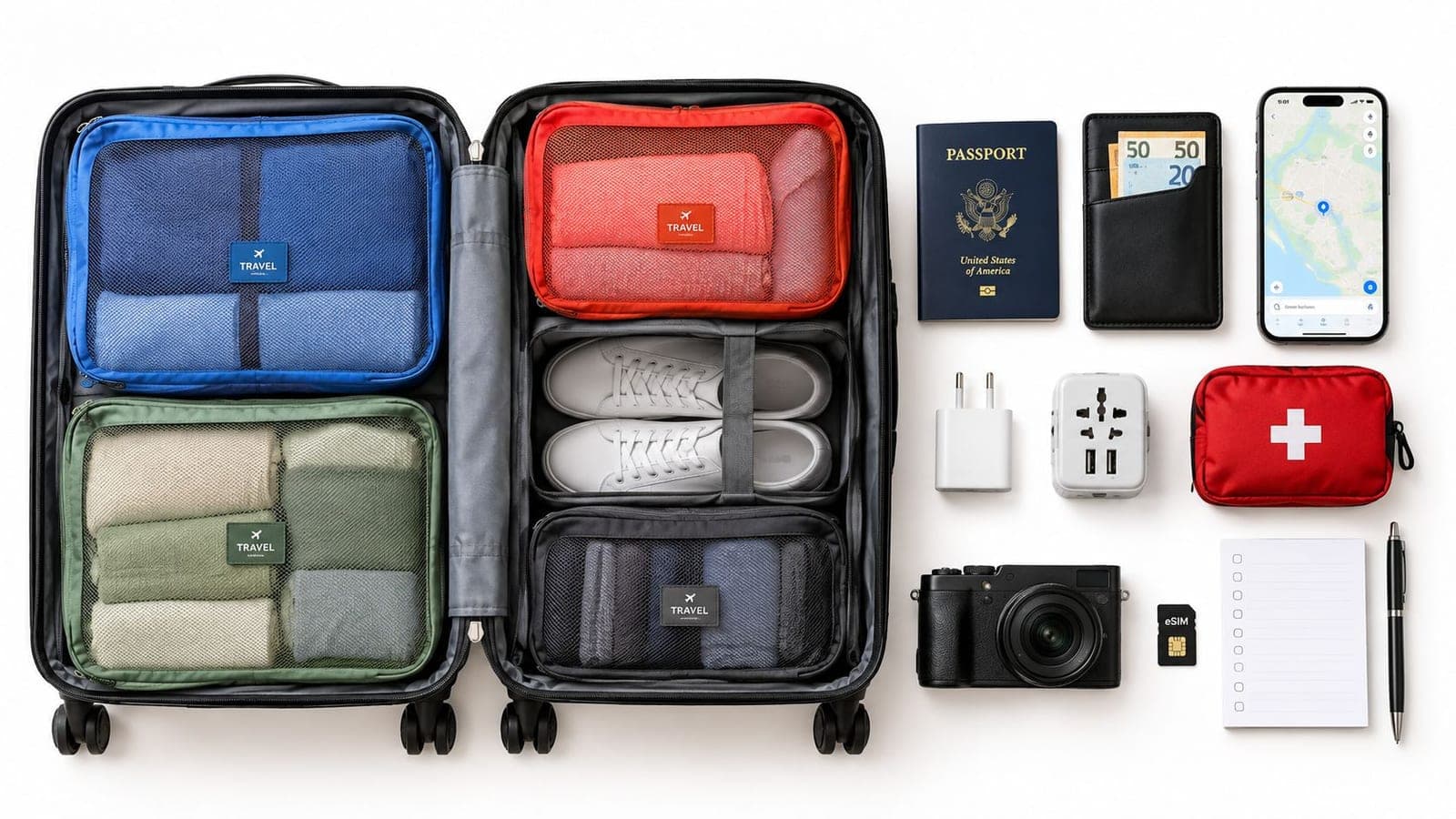
Booking changes are done, the bags are half packed, and the route still has one ugly question mark. That's the point where a European travel checklist stops being a nice idea and starts being the difference between a smooth departure and a gate-side scramble.
The smart move is to treat the trip as one system, not a pile of separate tasks. Documents, health coverage, roaming, cash, and packing all need to line up before anyone leaves home, because Europe punishes lazy assumptions fast.
Preparing for Your Trip
A traveler who books Paris, Milan, and Barcelona in one go can still get tripped up by one missing detail. The mistake is usually simple, a passport checked too late, a phone that never got tested, or a border rule that was assumed instead of verified. A serious European travel checklist prevents that mess by forcing every moving part into the same pre-trip review.
Build the trip around the rules, not the other way around
Start with the destination map, then overlay the document and logistics rules on top of it. That means checking whether the trip touches the Schengen Area, whether any border crossing changes the authorization requirements, and whether the traveler needs public health coverage or separate insurance. It also means deciding early whether mobile data will come from domestic roaming, a travel eSIM, or a mix of both.
Practical rule: If a trip crosses several countries, the safest approach is to plan the itinerary by border events, not by city names.
A useful way to think about the checklist is in six bins, documents, border rules, health, connectivity, money, and packing. Each bin has its own failure points, but the main risk comes from how they interact. A valid passport does little good if the traveler misses a stay limit, and a packed suitcase does nothing if the phone can't connect on arrival.
Use one master list instead of scattered reminders
A single written checklist works better than app notifications spread across email, notes, and booking confirmations. Keep the trip dates, the passport being used, accommodation details, insurance references, roaming setup, and baggage notes in one place. That makes last-minute decisions easier at the airport, especially when a connection changes or a border rule becomes relevant.
For travelers managing Europe-wide data plans, a regional option can reduce friction. One example is a Europe & UK eSIM, which fits the kind of trip that crosses multiple borders without wanting multiple country profiles open all week, and the current destination coverage is listed on RedSim's destination page. That kind of setup belongs in the checklist from day one, not after the flight is already boarding.
Verifying Travel Documents
The first essential check is the Schengen short-stay rule, which limits non-EU travelers to 90 days within any rolling 180-day period (European Commission). The count does not restart just because a traveler moves from France to Italy to Germany, and both the entry date and exit date count. The only sane way to manage that is a written day-by-day itinerary with prior Schengen days recorded before departure.
Confirm the stay calculation before anything else
If the trip involves multiple Schengen stops, the traveler should count every day of presence across the whole area, not just the nights in the first country. A short gap in a non-Schengen country does not automatically reset the clock, so that common shortcut is wrong. A continuous absence of 90 days can restore eligibility, but that is a planning horizon, not a quick reset trick.
Carry the stamps, the itinerary, and the math. Border officers care about all three when a stay looks close to the limit.
Gather documents in the right order
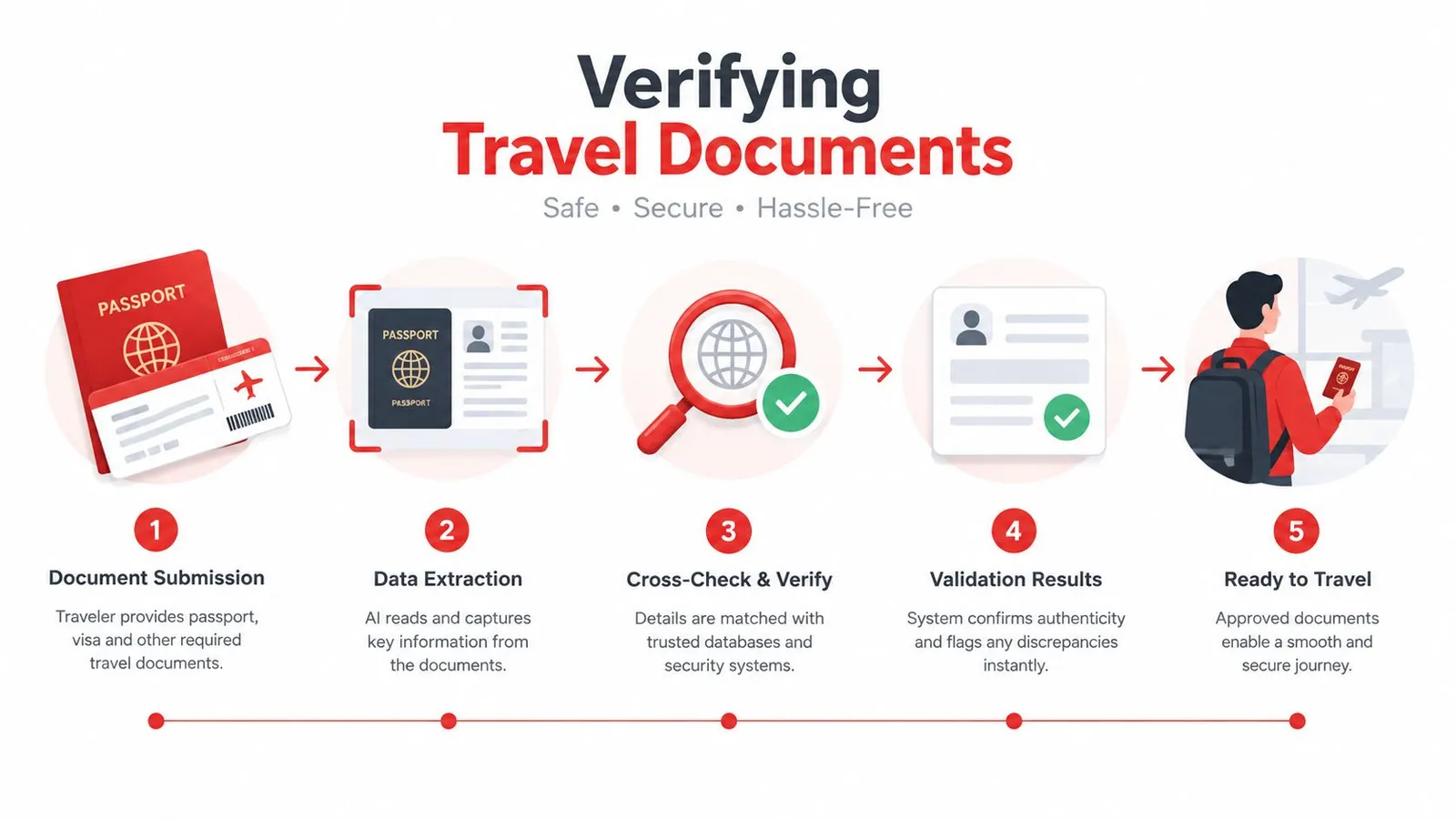
After the stay calculation, move to the passport itself, visas or visa-free eligibility, and any destination-specific entry conditions. The key is not to treat the passport as enough by itself. The traveler should verify validity on the actual travel day, then confirm that the document type matches the nationality rule for each country in the route.
Keep copies in more than one place, but don't rely on a digital copy as the only version. The practical habit is to store scans securely, carry the original, and keep the itinerary aligned with the passport used for the trip. That matters because border checks, airline checks, and hotel registration can all ask for the same physical document.
Build a clean backup stack
A strong document folder should include the passport, any required visa or authorization, proof of onward travel if relevant, and accommodation confirmations. If the traveler has several recent European trips, the stamp history also matters because the 180-day lookback is moving. Write the dates down before leaving, then keep that note with the itinerary so the calculation doesn't live in memory alone.
Managing Passport and Border Authorizations
EU nationals have a simpler baseline. They may travel across 27 EU states plus Iceland, Liechtenstein, Norway and Switzerland with a valid national ID card or passport on the day of travel, but they still need to carry the document for airline checks, accommodation, and external-border control (EU citizens travel rules). That rule does not generalize to non-EU travelers, who need a destination-specific review of passport validity, visa or visa-exemption status, and permitted stay.
EES and ETIAS are not the same thing
The border stack is shifting, and that's where many travelers get sloppy. EES is the biometric entry and exit system for non-EU and non-Schengen nationals visiting the Schengen Area for short stays, while ETIAS is a separate travel authorization for visa-exempt travelers. They should not be treated as one generic visa requirement, because they solve different problems at different times.
The key planning point is timing. Travelers need to prepare for biometric border processing when required, while ETIAS is tied to the passport used in the application and should be handled through the official EU channel when it becomes relevant. That means the exact passport in the application must be the passport carried on the trip.
Map the border event, not just the destination
A same-country change can still trigger a different requirement if it involves passport control. An airside connection that stays within the international transit area is one thing, but once a traveler changes terminals, clears passport control, or crosses an external border, the requirement changes too. That's why a multi-city route should be marked by border events, not by hotel stops.
For travelers building a mobile-data plan around that route, the country map matters. A useful reference for regional coverage is RedSim's Europe eSIM country page, which helps when the itinerary touches several places in one trip. The point isn't to buy something first, it's to line up the connectivity plan with the border plan so there's no dead zone between countries.
Securing Health Coverage and Insurance
The European Health Insurance Card is valuable, but it is not travel insurance. The European Commission reported that almost 206 million people held an EHIC in the latest figures in its cited summary, and the card entitles eligible holders to medically necessary treatment through the public system in EU countries, Iceland, Liechtenstein, Norway, and Switzerland (European Commission summary). That is useful protection for eligible residents, but it does not cover private care, planned treatment abroad, evacuation, or repatriation.
EHIC covers the basics, not the whole trip
EHIC is best treated as a public-health access card, not a shield for every medical problem. It can help an eligible traveler get necessary treatment under local public-system conditions, but it won't rescue the trip if a private clinic, an ambulance flight, or a cancellation claim is involved. That gap is why a separate travel insurance policy still matters for many itineraries.
A traveler should confirm that the card is valid for the whole journey and understand the destination's public-care setup before leaving. If the trip includes activities with higher risk, baggage exposure, or the possibility of itinerary disruption, private insurance is the right backstop. The point is not duplication, it's coverage for the things the EHIC doesn't touch.
Pick insurance for the gaps, not for the brochure
Good travel insurance is the policy that fills the holes left by public coverage. That usually means medical evacuation, trip interruption, baggage protection, and private-care access if public care is not practical. The traveler should read the terms with the same attention given to flight times, because the exclusions matter more than the marketing line.
One detail that's easy to miss is that non-European visitors can't use EHIC as a substitute for visa-related insurance or financial proof. That means the insurance decision should be made alongside the nationality check, not after it. If the route includes several countries, keep the proof of cover in the same document wallet as the passport and booking confirmations so it's ready when needed.
Setting Up Mobile Connectivity
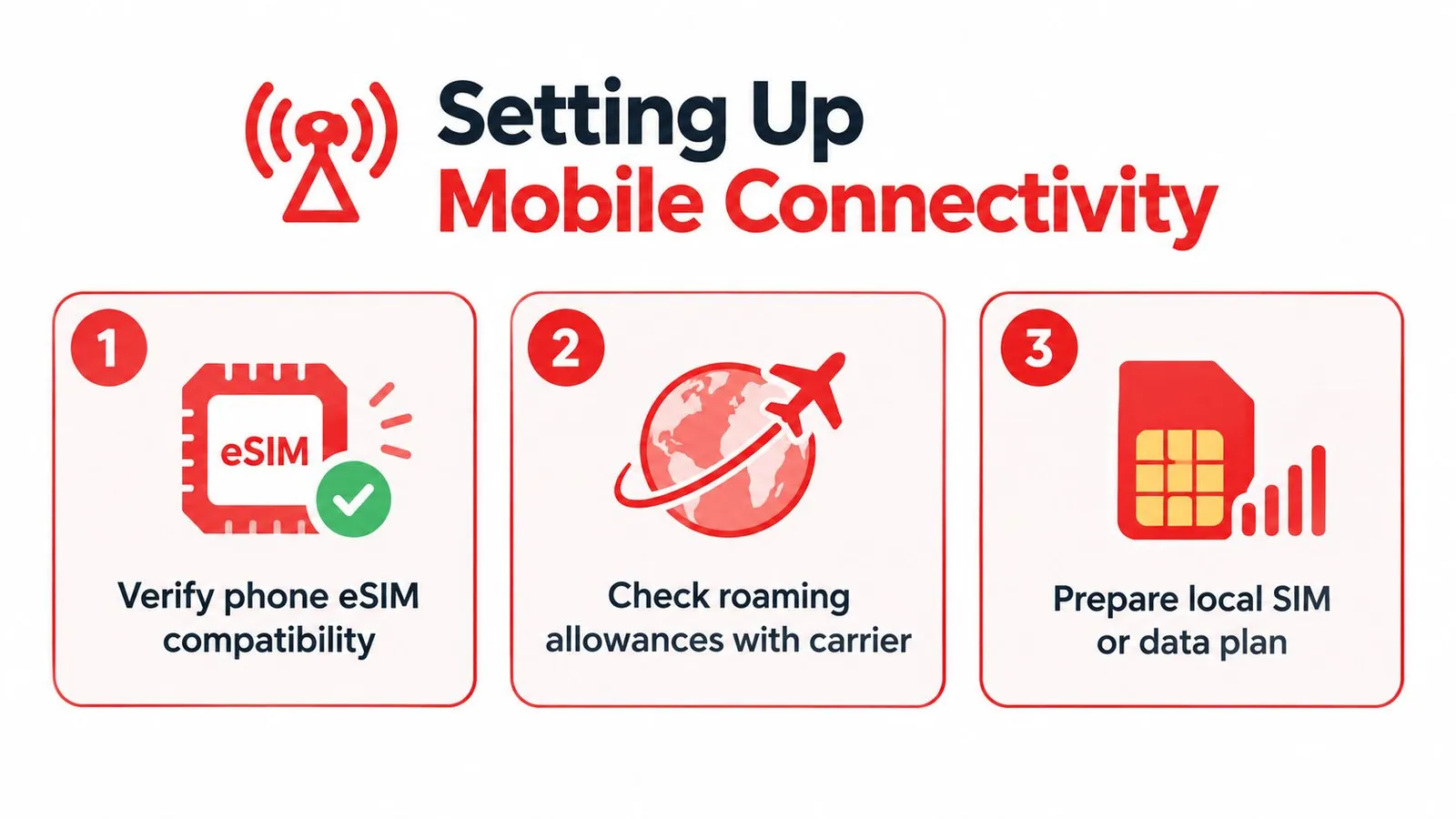
A traveler who sorts mobile access late usually pays for it at the border. The phone should support eSIM, be free of carrier restrictions, and be ready before departure. Leave any of those checks to the airport, and the setup becomes a problem you do not want.
Check the device before the trip
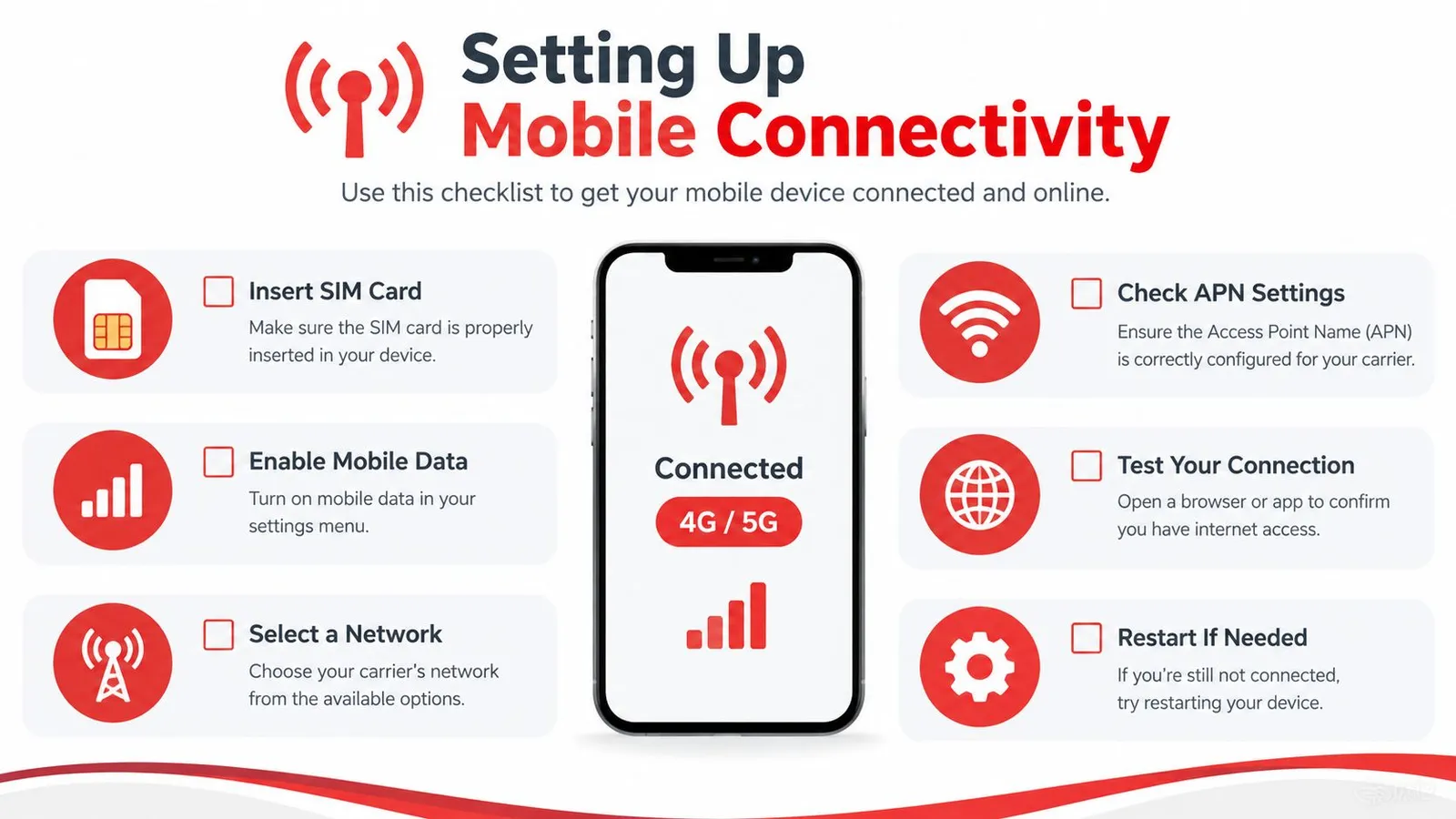
Start with the phone, not the plan. Dial *#06# to see whether the device shows an EID, which indicates eSIM support, and on iPhone, go to Settings > General > About to look for “No SIM Restrictions” beside Carrier Lock while using the guide to checking carrier restrictions. An EID alone does not guarantee the phone will connect if carrier restrictions are still in place.
Check carrier status before you leave. An eSIM that installs cleanly can still fail to register after landing if the device is tied to another network. That failure is avoidable, and it is easier to fix at home than in arrivals with no working data.
Install on Wi-Fi and keep the line off until landing
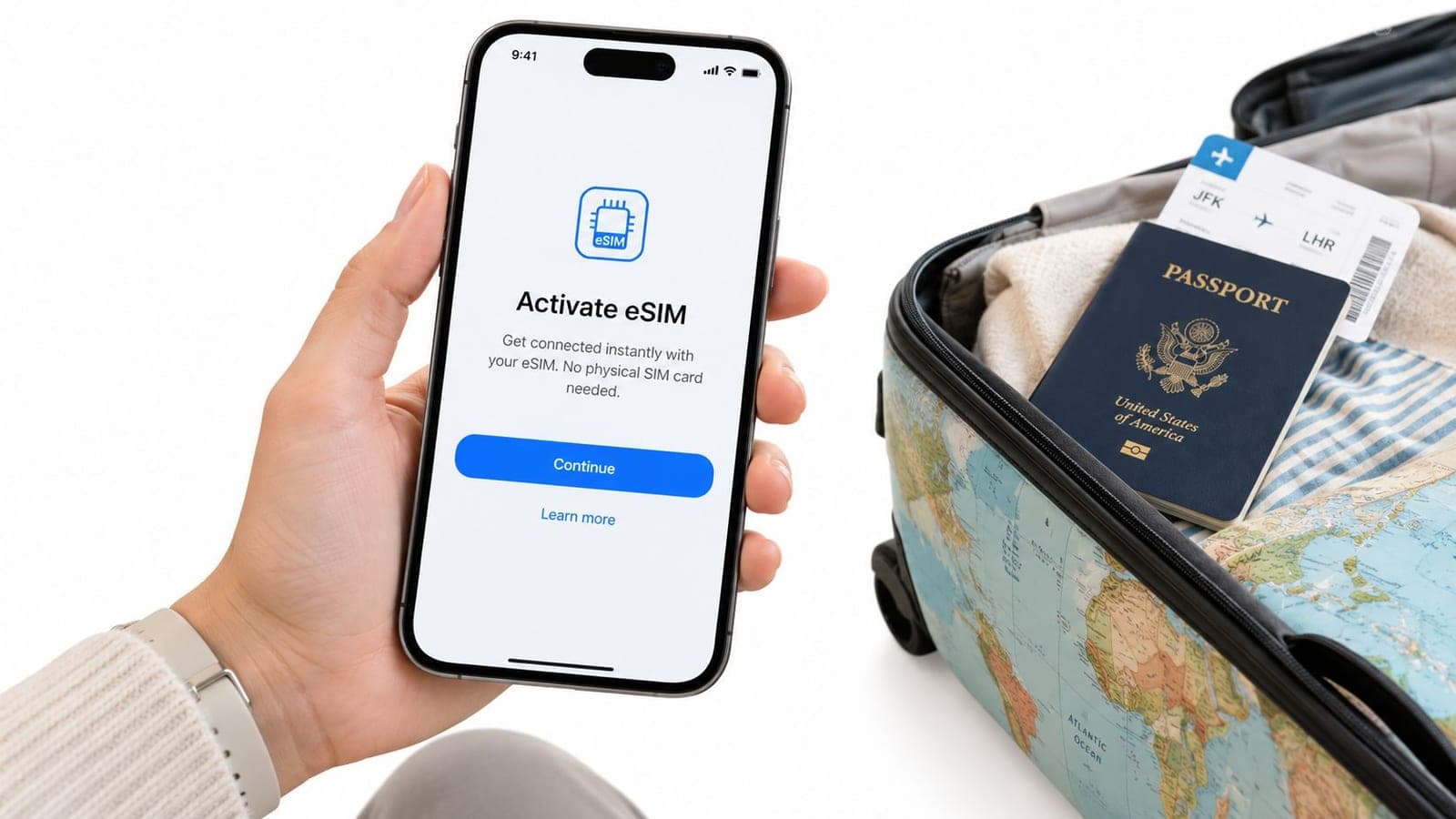
Install the eSIM on stable Wi-Fi before departure. A Google-oriented installation flow uses Settings > Network & Internet > SIMs > Add eSIM > Set up an eSIM, then the user selects the eSIM under SIM settings, turns roaming on for that line, and chooses it as the mobile-data line (installation guide). Do the setup while the connection is reliable, then leave the travel line disabled until arrival if you want control over when data starts.
That saves time at the destination. On landing, turn on data roaming for the eSIM line and set it as the active mobile-data line. The phone should connect on your terms, not on its own schedule.
Manage multiple profiles without making it messy
Multi-country trips get messy when every border means a new SIM decision. Keep the setup simple with one travel profile that covers the route, and store the extra country options only if you actually need them. The regional options on RedSim's Europe eSIM page cover multi-country routes in one profile, which is far cleaner than juggling separate plans from country to country.
Keep the profiles organized inside the phone and the account. The goal is one place to check usage, one line to activate, and no confusion when the route crosses a border. That is how you avoid the common mistake of arriving connected to the wrong line or no line at all.
Planning Your Finances
Money planning starts with one blunt idea, don't assume every European stop works the same way. Cash habits, card acceptance, and ATM behavior can vary by country and by neighborhood, so a traveler should carry a layered payment setup instead of trusting one card and hope. The safest approach is a primary card, a backup card, and some cash separated across different places.
Pay without creating avoidable friction
Card payments are usually the easiest option for most city travel, but the traveler should still have a backup method for small shops, transport, or places that prefer cash. Keep one card available for travel spending and another stored separately in case the first is lost or blocked. That's not overcautious, it's basic trip hygiene.
If a trip includes mobile purchases, wallet top-ups, or insurance purchases, alerts can arrive at awkward times. That's another reason to keep the payment methods organized before departure. The less the traveler has to approve under pressure, the fewer mistakes happen.
Keep access to cash without carrying too much
Cash still matters, especially for small expenses or places that don't handle cards cleanly. The right move is not to carry a large bundle, it's to split funds so loss or theft doesn't wipe out the whole trip budget. Some cash in a day bag, some in a hotel safe, and a reserve card in a separate pocket is a sane split.
For connectivity purchases, it helps to know the price before the traveler needs the data. A pricing page such as RedSim's eSIM pricing page can help compare options before the trip starts, which is better than paying under pressure in a taxi queue or airport lounge. Keep the money plan and the data plan coordinated, because both affect how flexible the traveler is once the trip begins.
Packing Clothing and Essentials
Packing for Europe should be about flexibility, not volume. A traveler who stuffs in too many shoes, backup outfits, and bulky toiletries usually ends up dragging more weight than needed through train stations and stairwells. The smarter move is a tight wardrobe built around weather, walking, and the kinds of places on the itinerary.
Build a bag around movement
Europe rewards people who pack light enough to handle stairs, cobblestones, and fast transfers. That means comfortable, broken-in shoes, clothing that layers cleanly, and a jacket that works in more than one setting. Bring clothes that can move from daytime sightseeing to dinner without a dramatic costume change.
Simple packing rule: Every item in the bag should earn space in at least two situations, or it stays home.
A traveler should also think about the weather, because European trips can swing from warm afternoons to cool evenings fast. A compact umbrella, a weather-appropriate outer layer, and a few adaptable pieces beat a suitcase full of one-use outfits. The more the wardrobe mixes and matches, the less the trip depends on laundry luck.
Don't forget the utility gear
Electronics need the same discipline. Phone charger, power bank, adapters that match the countries on the route, and a secure way to carry them all belong in the main pack, not buried under shoes. A separate pouch for cables and small tech stops the usual airport hunt when one charger disappears into the lining.
The document wallet should stay different from the clothing bag, because those items are accessed on different timelines. Passports, insurance references, and booking confirmations need quick reach, while socks and layers don't. That separation keeps the traveler from opening every pocket in front of the airline desk.
Use a device check before you go
If the trip depends on a phone-based data plan, the device should be ready before the bag is zipped. A compatibility page such as RedSim's compatible devices page helps confirm whether the phone can handle the setup and whether the current device is worth relying on. That check is small, but it prevents a whole chain of problems later.
Organizing Itinerary and Logistics
Mark every crossing on the route before writing a single hotel name into the itinerary. A messy schedule makes every other decision harder, especially when passport control, a border change, or an eSIM switch depends on the order of the trip.
Tag every transit event
Start with the transport map. Flag every airport change, rail crossing, overnight connection, and city transfer that can affect border checks or authorization rules. A Paris-to-Zurich rail leg with a change in Basel counts as one border event. A New York-to-London-to-Rome booking with a terminal change at Heathrow counts as two.
Write those points into the itinerary as soon as the tickets are confirmed. That gives you a clear route log, and it stops the common mistake of treating the journey like one simple block of travel when the checkpoints are not simple at all.
Keep the mobile plan aligned with the route
The data plan should follow the itinerary. If the trip crosses several countries, know when roaming begins, which line should carry data, and whether a regional plan makes more sense than several separate ones. For setup details, use the connectivity section, then write the eSIM switch-on time next to the first arrival in the itinerary.
A good itinerary note also records where the key documents are stored. Passport, EHIC if eligible, insurance details, and the main payment card should sit in one secure place that is easy to reach but hard to lose. Keep that note clean and specific, because sloppy storage causes delays at the worst moments.
Quick Reference Checklist
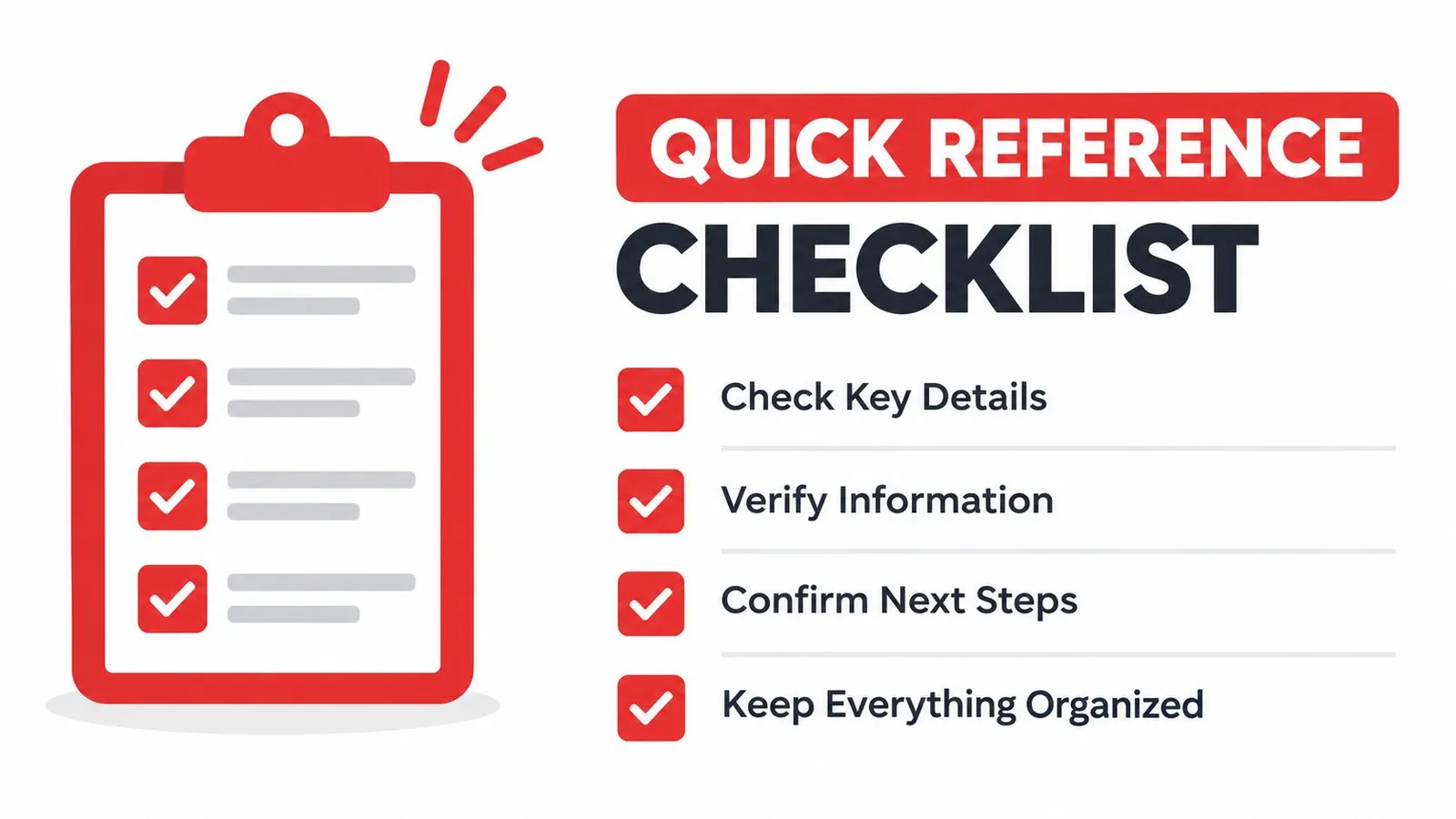
| Category | Action | Timing |
|---|---|---|
| Documents | Check passport validity and destination entry rules | Before booking and again before departure |
| Schengen timing | Count every Schengen day in the rolling stay window | Before each trip and after any prior Europe travel |
| Border setup | Confirm whether EES or ETIAS applies to the route | When the itinerary is final |
| ID checks | Carry the correct passport or national ID card | On the travel day |
| Health coverage | Carry EHIC if eligible, add travel insurance where needed | Before departure |
| Connectivity | Verify eSIM support and carrier unlock status | Several days before travel |
| Connectivity | Install the eSIM on Wi-Fi and keep it off until landing | Before the flight |
| Connectivity | Turn on data roaming for the travel line and select it as mobile data | On arrival |
| Money | Split card and cash access across separate places | Before leaving home |
| Packing | Pack layers, walking shoes, chargers, and adapters | 24 to 48 hours before departure |
| Itinerary | Mark every terminal change, border crossing, and transit event | As soon as tickets are confirmed |
A disciplined European travel checklist is just a clean sequence of decisions. Verify the documents, line up the border rules, sort health cover, test the phone, and pack for movement instead of vanity. That order cuts out most of the drama.
RedSim gives travelers regional and country eSIM options for Europe, along with app-based setup, data top-ups, and usage tracking in one place. For trips like this, it fits the connectivity side of the checklist without forcing the traveler to juggle multiple SIM cards. Visit RedSim to review the available Europe travel data plans before the next departure.
 Vietnam