For most trips, 5 GB to 10 GB is enough for maps, messaging, browsing, and some social media, while 10 GB to 20 GB is a safer fit for light-to-moderate travel use because mainstream smartphone data use already averages 22 GB per month worldwide and keeps rising. There isn't one correct number, though. The right answer depends on trip length, what the phone does all day, and whether it has to hotspot a laptop.
That's the mistake most travelers make when they search how many GB do I need. They hunt for one magic number, buy the smallest plan that sounds plausible, and then get stranded outside a train station, airport, or hotel with no data left.
A better way to decide is to match the plan type to the trip. You only need to choose between three structures: a prepaid data bundle for light use, an unlimited plan for heavy use or hotspotting, and a custom day pass for awkward trip lengths or inconsistent usage.
Why There Is No Single Right Answer to How Many GB You Need
Anyone asking how many GB do I need is usually asking the wrong question.
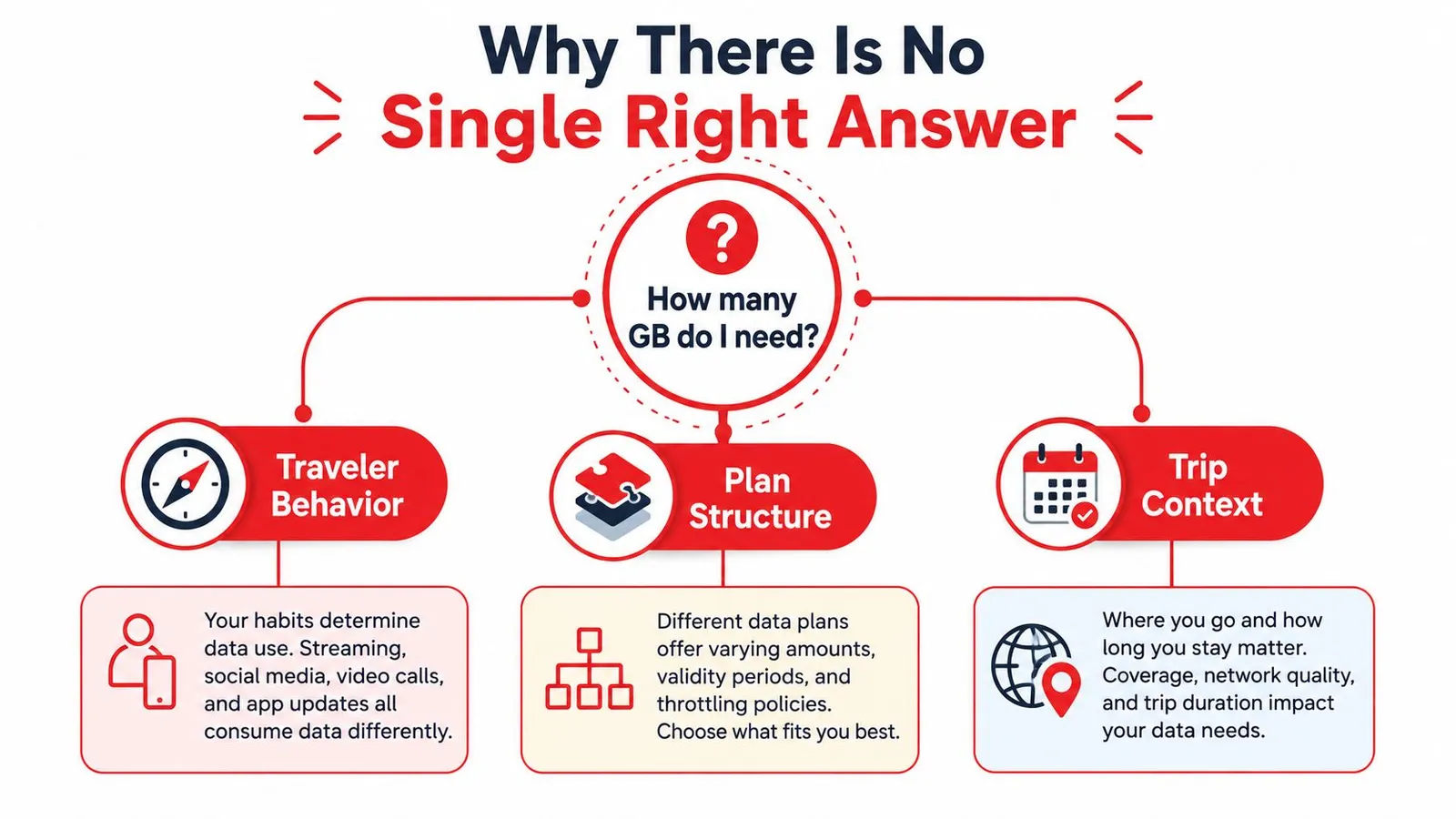
what kind of plan fits the way the traveler will use data on this trip. A weekend city break and a month of remote work might both involve the same phone, but they are not the same data problem. One mainly needs maps, ride-hailing, booking emails, and messaging. The other can involve hotspotting a laptop, video calls, uploads, and long days away from Wi-Fi.
This visual makes the point fast:
The three plan structures that matter
There are only three useful buckets here.
- Prepaid bundles: Fixed amounts like 1 GB, 5 GB, 10 GB, or 20 GB. These are the cleanest option for people who mostly use maps, chat apps, email, and light browsing.
- Unlimited plans: Better for streaming, all-day navigation, regular video calls, or any trip where the phone will share data with a laptop or tablet.
- Custom day passes: Good for odd trip lengths, stopovers, or trips where some days are active and others are mostly on hotel Wi-Fi.
Practical rule: Pick the structure first. Pick the gigabytes second.
The three variables that change the answer
A traveler only needs a few inputs to narrow this down.
- Trip length. Two days is different from ten. Ten days is different from a month.
- Traveler type. A leisure tourist uses data differently from a business traveler or a family.
- Hotspot use. This is the big one. If the phone has to feed a laptop, data use jumps fast.
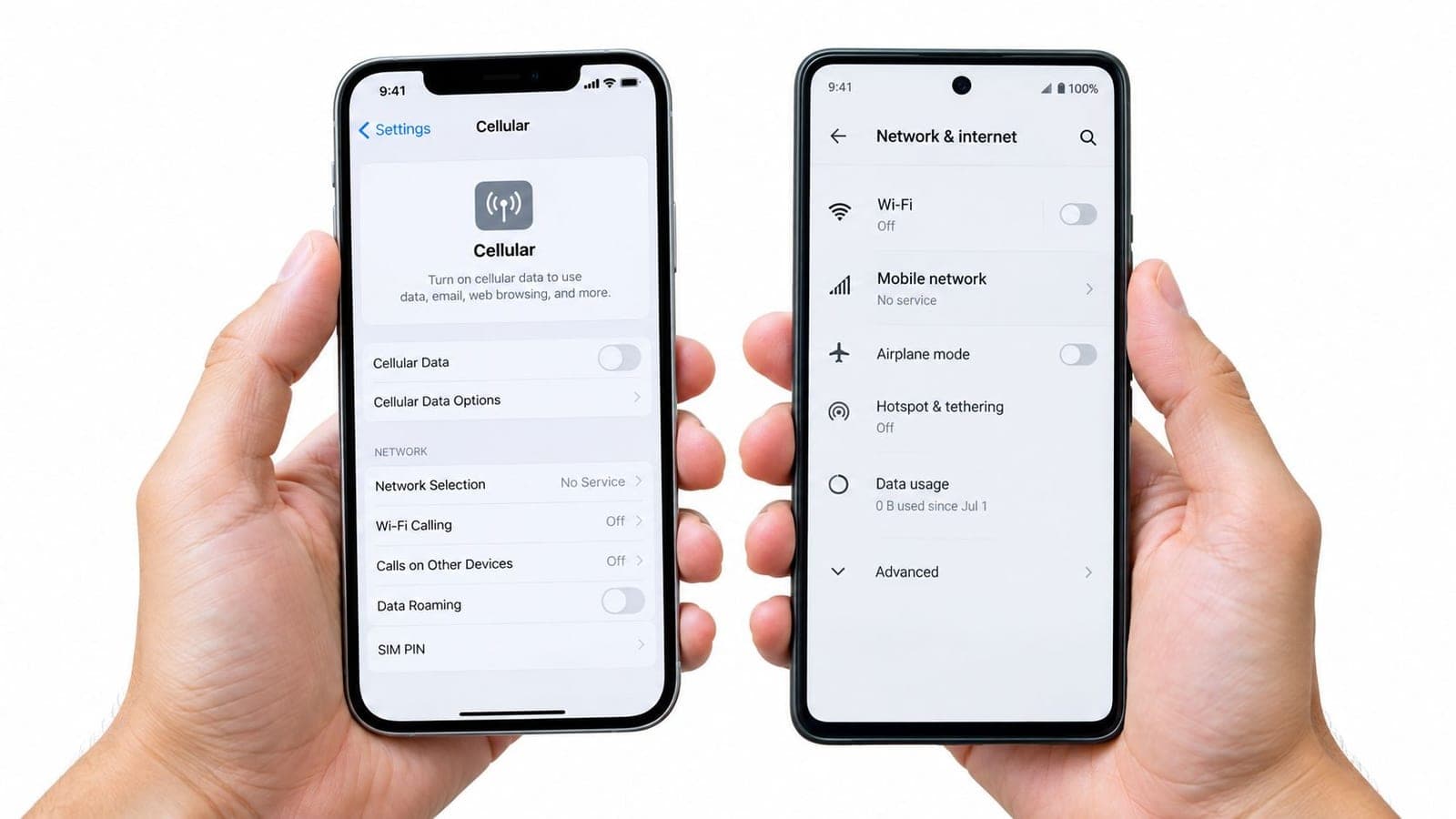
Phone setup matters too. Before shopping for any eSIM, it makes sense to check whether the phone supports eSIM on this compatibility guide.
What Actually Eats Your Data on the Road
Maps and messages aren't what usually drain a plan. Background sync, streaming, and laptop tethering are.
That matters because a lot of travelers still think they use “hardly any data” abroad. Historically, that was often true. BEREC found average monthly usage per roaming subscriber at about 0.48 GB in its benchmark for Q4 2020 and Q1 2021, which reflects how often people avoided roaming data when it was expensive (BEREC international roaming benchmark report_115_27th_BEREC_International_Roaming_Benchmark_Data_Report.pdf)). Modern eSIM travel plans are built for a very different travel routine.
What barely matters
For light trips, some activities are tiny.
Active Google Maps or Apple Maps navigation is typically about 5 to 10 MB per hour, and email plus messaging often uses only a few MB per hour, according to the Siima travel data usage calculator. That's why a traveler who mainly checks directions, confirms bookings, and chats with family can go a long way on a modest bundle.
What burns through data fast
Streaming and hotspotting are where plans get destroyed.
A practical travel calculator from Vodafone puts standard-definition streaming at about 1 GB per hour, high-definition at about 3 GB per hour, and ultra-HD at 7 GB or more per hour (Vodafone travel data guide). If a traveler watches a couple of shows over mobile data, a 5 GB plan can disappear fast.
Hotspotting is even trickier because laptops behave badly on mobile data. They open full desktop sites, sync files, update apps, and default to heavier video streams.
Turn off photo backup and app updates on cellular before boarding. Those two settings quietly wreck travel bundles.
Typical Data Use per Travel Activity
| Activity | Typical Data Use | Notes |
|---|---|---|
| Maps navigation | 5 to 10 MB per hour | Very light if it's mostly routing and live navigation |
| Email and messaging | A few MB per hour | Usually negligible unless lots of media files are sent |
| Light browsing and bookings | Low to moderate | Fine on a prepaid bundle for most trips |
| SD video streaming | About 1 GB per hour | A few hours can wipe out a small bundle |
| HD video streaming | About 3 GB per hour | Heavy use territory |
| Ultra-HD streaming | 7 GB or more per hour | Bad fit for capped travel plans |
| Laptop hotspot with video calls and browsing | About 0.5 to 1.5 GB per hour | Starts to add up very quickly |
| Hotspot with heavier video use | About 2 GB per hour or more | Strong case for unlimited |
The Four Questions That Pick Your Plan in Under a Minute
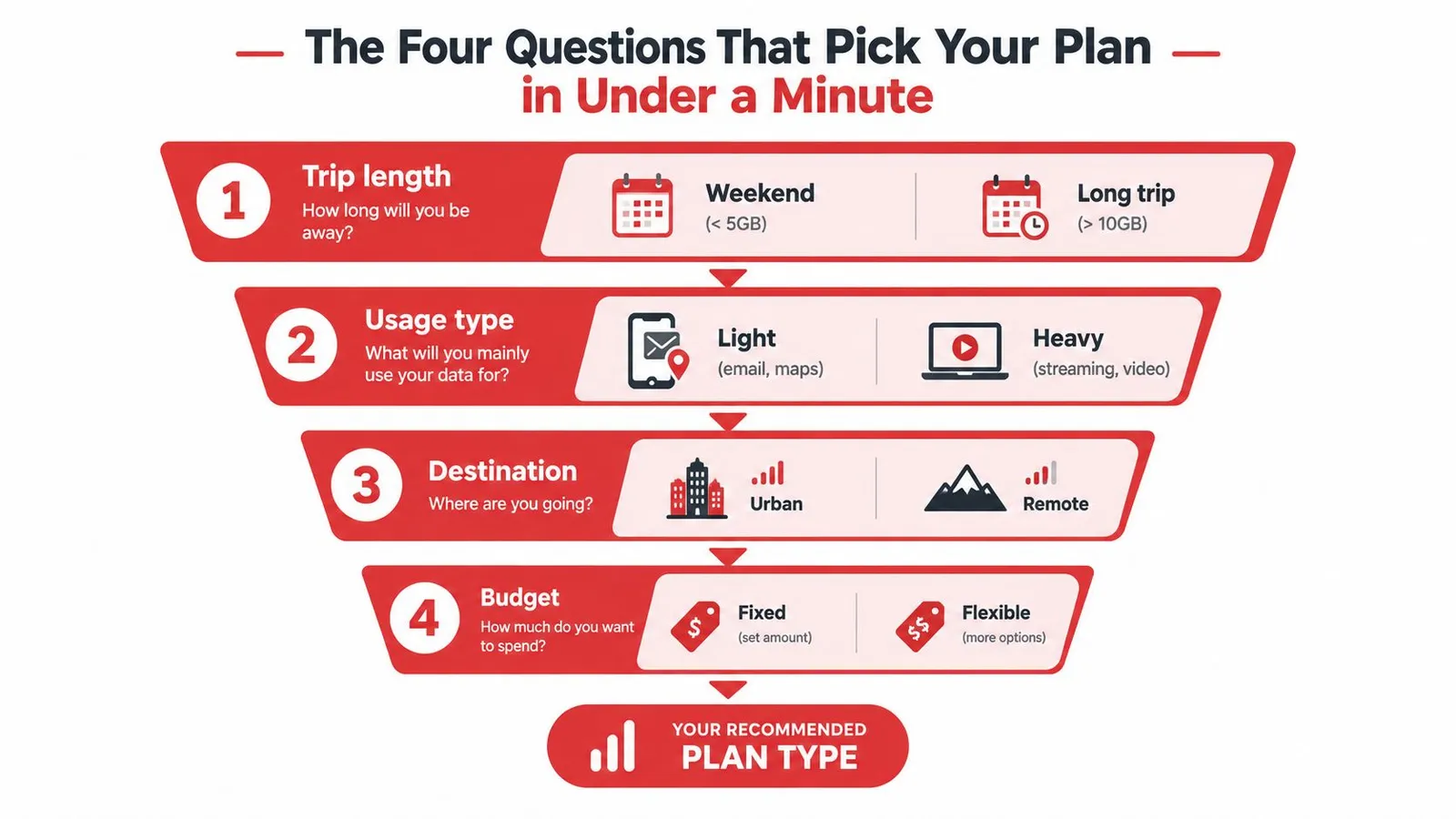
A calculator isn't necessary. Four questions usually settle it.
This is the fastest way to stop guessing and land on the right type of plan. The goal isn't fake precision. The goal is to avoid obvious mistakes, like putting a remote worker on a tiny bundle or buying unlimited for someone who only needs maps and WhatsApp.
This decision flow sums it up well:
For people who want a product shortlist after that, this plan selection guide for travel eSIMs is the next practical step.
Question one asks about time
Is the trip under seven days or over seven days?
Short trips forgive small plans. Longer trips don't. A weekend traveler can stay well within a small bundle if usage is light. Once a trip stretches past a week, the odds of using more navigation, more social apps, more uploads, and more backup connectivity all go up.
Question two catches the real data killer
Will the phone hotspot a laptop or tablet for more than an hour per day?
If yes, the answer shifts upward immediately.
One travel analysis puts hotspotting a laptop at about 1.5 to 3 GB per day for heavy-use cases, while light travel use sits at roughly 200 to 500 MB per day (The BitJoy guide to travel data needs). That gap is why generic “5 to 10 GB is enough” advice often fails remote workers and families.
Question three checks for video
Will there be daily video calls or HD streaming on mobile data?
If yes, small bundles stop making sense. If no, a prepaid cap becomes much easier to manage.
Question four decides country versus region
Is the traveler staying in one country or moving across several?
If several countries are involved, the structure matters as much as the allowance. A regional eSIM is usually cleaner than juggling separate country plans.
A multi-country trip with moderate use often needs a regional setup more than it needs a bigger raw GB number.
Fast outcomes
- Short trip + light use + no hotspot + one country: small prepaid bundle
- One week or more + light to moderate use + no regular streaming: 5 GB to 10 GB prepaid bundle
- Any trip + laptop hotspot or heavy video use: 10 GB minimum, often better on unlimited
- Several countries + uncertain usage: regional plan or custom day pass
Matching Data to Trip Length From a Weekend to a Month
Trip length is the easiest filter because it shapes the plan before the details do. A short trip can tolerate a cap. A longer trip usually needs more flexibility.
Recent travel guidance also points to a practical buffer. Some newer travel guides recommend adding a 20% to 30% buffer because trip behavior is unpredictable, and they place typical tourism around 3 to 5 GB per week, stretching to 15 to 30 GB for one month and 50 GB+ for heavy users (Holafly travel data planning guide). That isn't a reason to overspend. It is a reason not to cut things too close.
Trip Length to Data Plan Match
| Trip Length | Recommended Plan Type | Suggested GB Range | Typical Use Cases |
|---|---|---|---|
| Weekend | Prepaid bundle or single day pass | 1 to 3 GB | Maps, chat, bookings, light browsing |
| One week | Prepaid bundle | 5 to 10 GB | Daily navigation, ride-hailing, social apps, some uploads |
| Two weeks | Larger prepaid bundle | 10 to 20 GB | More travel days, patchy hotel Wi-Fi, heavier app use |
| One month | Unlimited or large regional plan | 20 GB or unlimited | Regular daily use, multiple travel days, backup connectivity |
| Long stay | Unlimited with hotspot support | Unlimited | Remote work, hotspotting, routine heavy use |
Weekend trips need restraint, not overkill
A two-day or three-day trip usually doesn't need a huge allowance. If the traveler sticks to maps, messaging, booking confirmations, and occasional uploads, a small prepaid bundle or short day pass makes sense.
The trap here is buying unlimited because it sounds safe. For a very short city break, that often solves a problem that doesn't exist.
One to two weeks is where most people should stop cheaping out
This is the sweet spot where 5 GB to 10 GB works for many travelers, and 10 GB to 20 GB is the safer lane for anyone posting regularly, relying on mobile navigation all day, or spending long stretches away from Wi-Fi.
For multi-country Europe trips, a regional Europe eSIM option usually makes more sense than stacking separate country plans.
A month or more changes the calculation
At a month, the question stops being “can this fit in one bundle” and becomes “is it smart to keep managing bundles at all.” For longer stays, repeated top-ups get annoying, and a heavy day can wreck the plan.
That's when unlimited or a large regional setup starts to look more practical than trying to micromanage usage.
Choosing the Right Plan by Traveler Type
The destination matters less than the traveler.
Two people in the same city can need completely different setups. One might use data for train directions and dinner reservations. The other might spend the same day in Slack, on a laptop hotspot, and in back-to-back video calls.
Plan Type by Traveler Profile
| Traveler Type | Best Plan Structure | Hotspot Priority | Watch Out For |
|---|---|---|---|
| Business traveler | Unlimited or high-cap regional plan | Very high | Video calls, laptop tethering, cloud dashboards |
| Family | Large bundle or unlimited | High | One person's hotspot use can drain shared data fast |
| Digital nomad | Unlimited with tethering support | Critical | Plans that look large but handle hotspotting poorly |
| Leisure tourist | Prepaid bundle | Low to moderate | Social apps and backups eating data in the background |
Business travelers should stop pretending 5 GB is enough
A short work trip can use more data than a longer vacation.
Laptop hotspotting is the reason. One independent hotspot guide puts video calls plus browsing on a laptop at about 0.5 to 1.5 GB per hour, and notes that HD streaming or video calling through a hotspot can hit about 2 GB per hour or more (Simbye hotspot data guide). That's why business travelers should lean hard toward unlimited plans with clear tethering support.
Families run into shared-data traps
Families often underestimate usage because each device seems harmless on its own. Then one child streams, another games, someone uploads photos, and one parent uses hotspot for a tablet.
A large bundle can work if everyone stays disciplined. In practice, families usually do better with a plan structure that can absorb spikes.
The family mistake isn't buying too much data. It's buying one small cap and assuming everyone will behave.
Digital nomads should judge the hotspot, not the headline number
For nomads, the phone often acts as backup internet. That makes hotspot quality more important than the printed allowance.
This is one area where RedSim is one option to consider because its travel eSIMs support hotspot sharing and active eSIM top-ups without issuing a new QR code. That matters more than a flashy number if the traveler expects to tether a laptop during the trip.
Leisure tourists usually need less than they think
Most tourists don't need unlimited. They need a sensible cap, decent coverage, and enough room for all-day navigation, restaurant searches, chat apps, ride-hailing, translation, and casual posting.
That profile usually fits a prepaid bundle much better than a premium unlimited plan.
Why Plan Structure Beats a Flat GB Number
A flat number sounds simple. It usually isn't.
A traveler can pick 10 GB, feel organized, and still choose the wrong product if the plan structure doesn't match the trip. A capped bundle behaves differently from an unlimited day pass. A regional plan behaves differently from a single-country plan. The allowance alone doesn't tell the whole story.
This comparison says more than another raw number ever will:
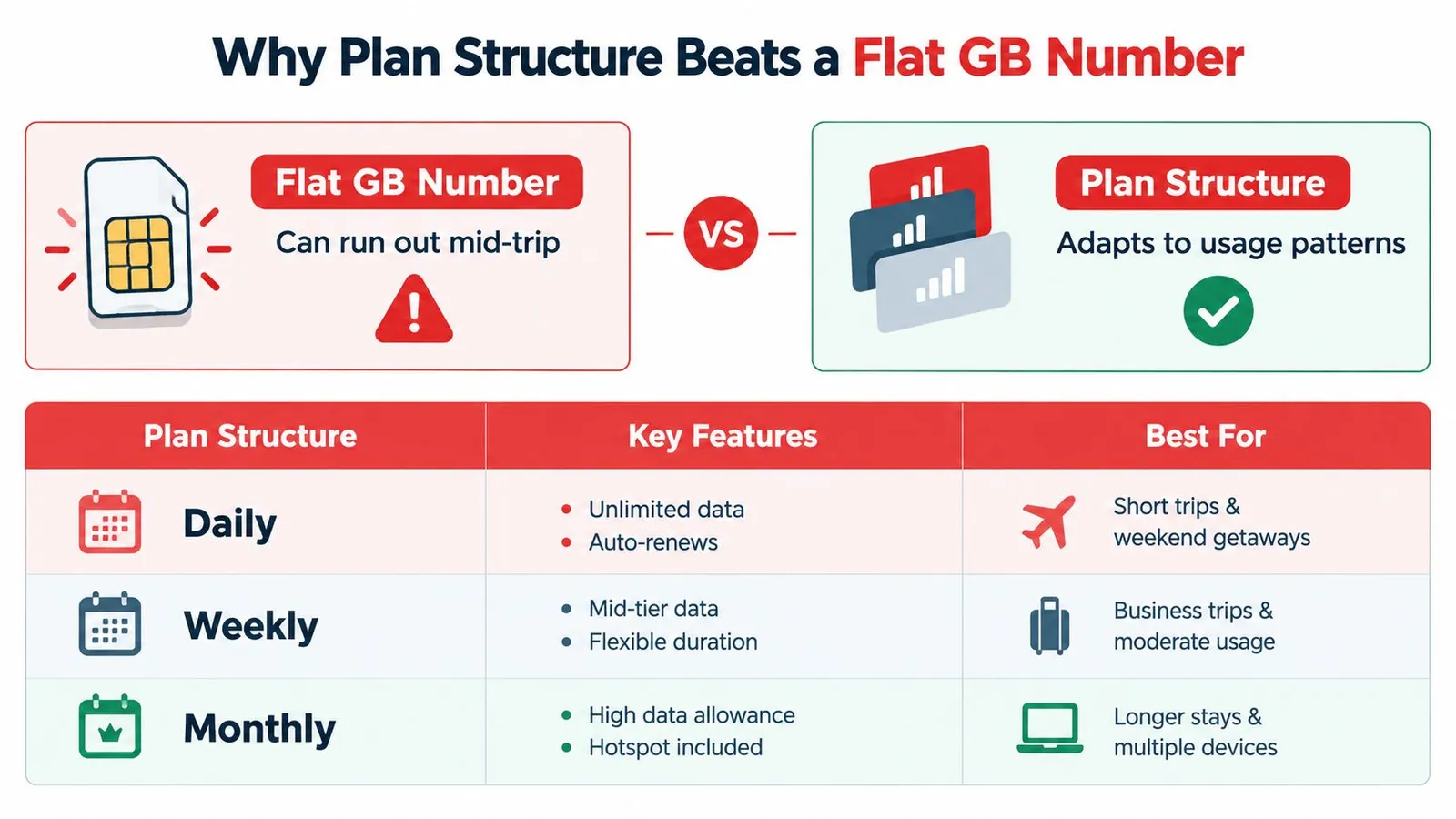
The number hides the bad day
The worst travel data days are not average days. They're transfer days, missed-train days, long road days, hotel Wi-Fi failure days, and work-call days.
That's why plan structure wins. A prepaid bundle is great when usage is predictable. An unlimited plan is better when one bad day could burn through the cap. A day pass is useful when some days need data and others don't.
Coverage and tethering matter more than tiny allowance differences
The difference between 10 GB and 15 GB often matters less than whether the plan supports hotspotting well, works across borders, and fits the actual rhythm of the trip.
For travelers crossing regions or juggling uncertain usage, a global eSIM option for multi-country travel can make more sense than obsessing over a single allowance number.
Your One Minute Decision Flow and Next Steps
A good decision takes about a minute.
Start with trip length. Then check whether the traveler is a light tourist, a business user, a family, or a remote worker. Then ask the hotspot question. That last one usually settles the debate.
This flow is the cleanest version:
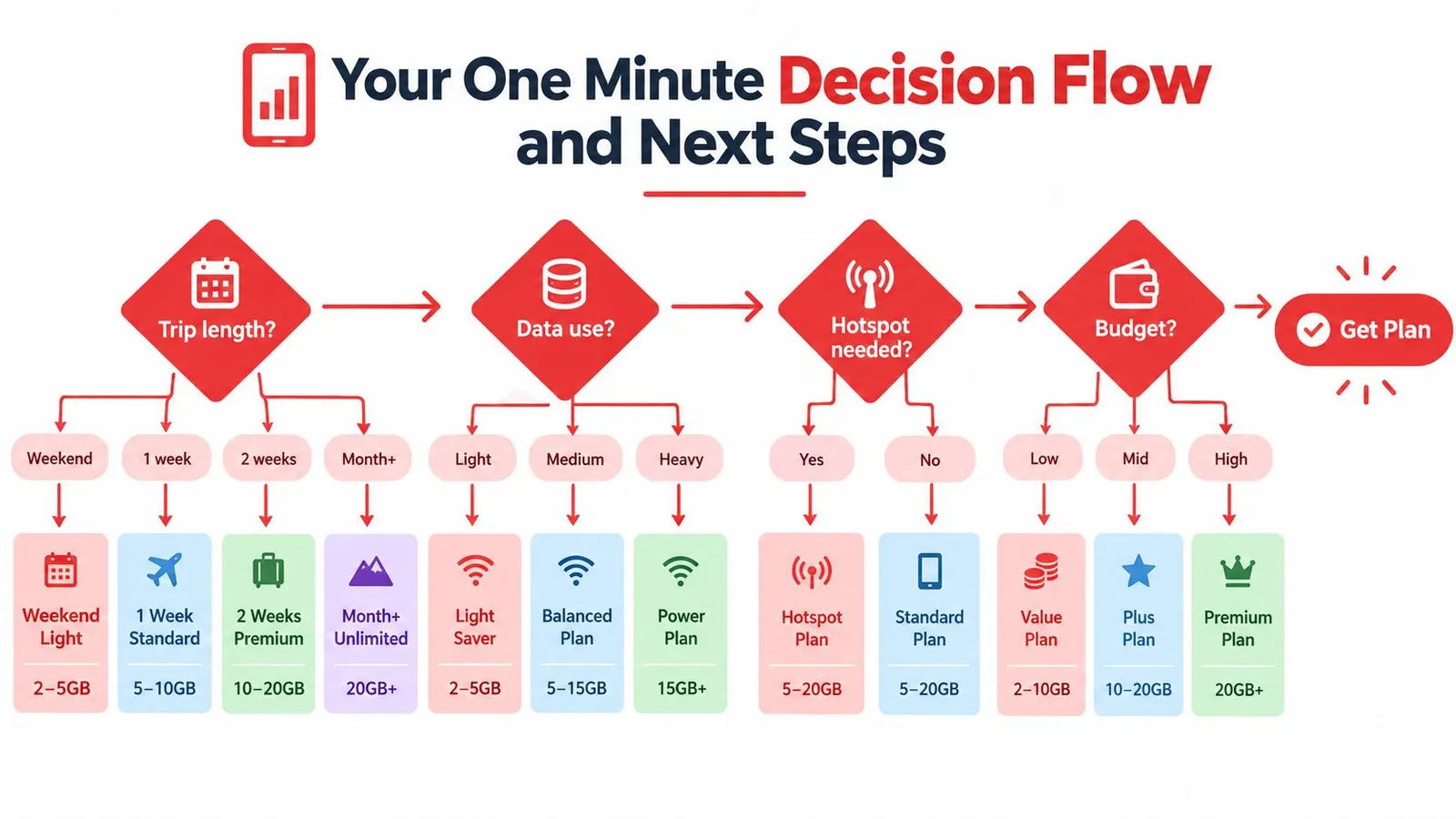
The fast decision path
- Weekend + leisure use: prepaid bundle, usually 1 to 3 GB
- Around one week + typical tourism: prepaid regional or country plan, usually 5 to 10 GB
- Two weeks + heavier app use or weak Wi-Fi: larger bundle, usually 10 to 20 GB
- Month-plus or frequent hotspotting: unlimited plan
- Odd trip length or unpredictable active days: custom day pass
The next checks that save headaches
Before buying anything, run through this list:
- Check device support: Confirm eSIM compatibility first.
- Check destination fit: Make sure the plan covers the exact country or region.
- Compare structures, not just allowances: Put one capped bundle next to one unlimited option.
- Leave buffer: Buy enough to survive one ugly travel day, not just the average day.
For travelers who want the setup step done quickly, the RedSim app download page is the practical starting point.
RedSim offers country, regional, and global travel eSIMs with fixed-data plans, top-ups on the same eSIM, and hotspot support, which makes it relevant for exactly this problem of matching plan structure to trip style. Travelers who want to compare a prepaid bundle against a regional or unlimited option can visit RedSim and pick based on trip length, countries, and whether the phone needs to feed other devices.
Refined using Outrank app