 Mexico
A traveler lands in Mexico, opens a map, and finds no connection. The same data is needed for messages, ride-hailing, transport confirmations, translation, or a laptop, yet roaming charges and device compatibility can turn a simple arrival into an expensive delay. An eSIM is a digital SIM profile installed on a compatible phone. Travel eSIMs are usually data-only, so they provide internet access rather than a regular mobile number for native calls and SMS.
The phone must support eSIM technology and have no carrier restrictions. That check matters in Mexico, where independent reporting linked to the Global eSIM Index 2026 placed the market 43rd out of 50, with a score of 58.2 out of 100, and estimated that only about 22% of smartphones could technically use an eSIM. Xataka México's coverage of Mexico's eSIM adoption also says more than 70% of phones in use still can't use a digital SIM.
The comparison below weighs coverage, price, allowance, validity, hotspot rules, throttling, installation speed, refunds, top-ups, support, and cross-border flexibility. RedSim sets the benchmark for fast provisioning and practical support, but the best eSIM for Mexico still depends on the itinerary.
1. RedSim
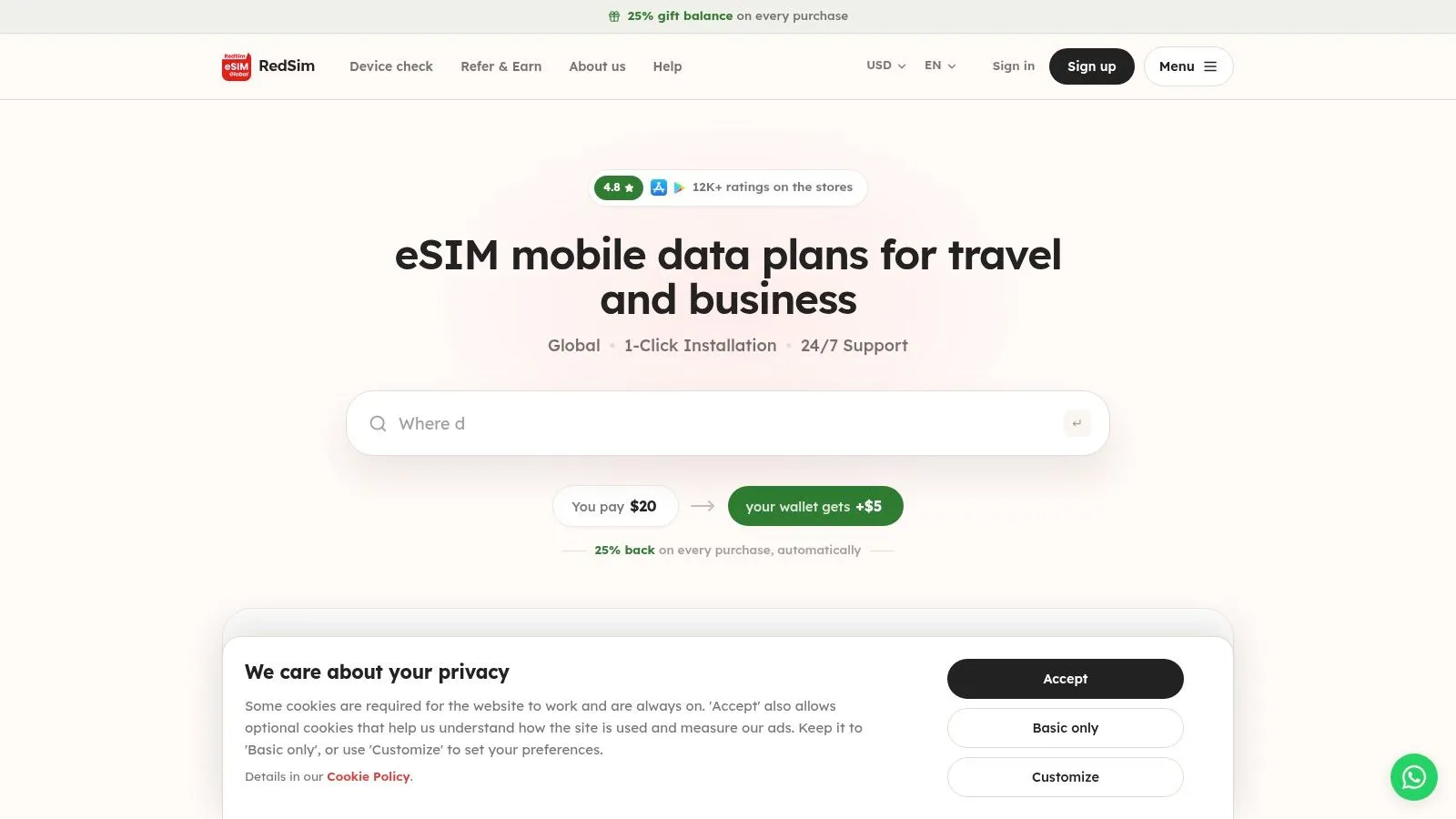
RedSim is a practical choice for travelers who want quick setup, hotspot access, and support during a Mexico trip. Its plans are data-only and can use Mexican networks such as Telcel and Movistar. Country plans start at about $3.40 to $3.50, with options including 5 GB, 10 GB, and 20 GB and validity of up to 30 days, according to the RedSim Mexico eSIM service. Travelers continuing into other countries should check whether the selected plan includes cross-border coverage or requires a separate regional product.
Setup is one of RedSim's clearest operational advantages. Travelers can receive a QR code by email or use one-click installation in the app. The provider presents installation as taking approximately two minutes, so the profile can be added before departure and activated for mobile data after landing. Before buying, travelers should review what an eSIM is before purchase and confirm that the phone supports eSIM and is free of carrier restrictions.
Why RedSim fits shared data and changing plans
RedSim supports hotspot and tethering, allowing one phone to share data with a laptop, tablet, or another phone. Each connected device draws from the same allowance. That makes an unlimited plan more suitable for families, groups, or laptop-based work, while travelers using maps, messages, and transport apps can choose a smaller fixed allowance. Check the plan terms for any throttling or fair-use conditions before relying on heavy tethering.
The app shows real-time usage and allows top-ups on an active eSIM without issuing a new QR code. A wallet can add a 25% gift balance to purchases, while the referral program offers invited customers 20% off and credits referrers with up to 40% of the order value. Those features are more useful for repeat travelers than a low starting price alone.
Practical rule: Install the eSIM before departure, but keep mobile data on the primary line until the Mexico trip begins unless the plan's terms say otherwise.
RedSim offers a full refund when an eSIM has not been installed or activated. Human support is available 24/7 through WhatsApp, with reported replies at about two minutes. The trade-off is the lack of a native phone number for ordinary calls or SMS, while sustained tethering may require a larger plan or additional top-ups.
2. Airalo
Airalo suits travelers who want a large catalog and several ways to size a Mexico data plan. Its Mexico offering includes multiple local products, such as Chido and Chido Plus, alongside regional plans for Latin America or North America and broader global options. The Airalo Mexico eSIM catalog supports purchase and installation through the app or QR code.
The main advantage is choice. A traveler staying briefly in one city can start with a small allowance, while a longer trip can use a larger fixed-data product or a regional plan that continues beyond Mexico. In-app top-ups and renewals reduce the need to buy and install a new profile during the trip. Airalo can also set an automatic renewal when the remaining data reaches 10%, which is useful for travelers who don't want to monitor usage manually.
Where Airalo makes sense
Airalo is a practical match for short trips, light data use, and travelers who already use the platform in other countries. The broad catalog is more valuable for a multi-country journey than for a traveler who only needs Mexico and wants the fastest support or the clearest hotspot policy.
Unlimited data isn't the standard format across its Mexico country listings, so travelers should compare the actual allowance and validity rather than assuming that the largest-looking plan is unrestricted. Regional performance can also vary, which makes the underlying partner network more important than the marketplace brand. A traveler focused on Mexico should check the current network and tethering terms on the Mexico plan details from RedSim alongside Airalo's live listing.
Airalo's trade-off is therefore straightforward. It offers variety and convenience, but travelers who need extensive laptop sharing, explicit local network disclosure, or highly responsive troubleshooting may prefer a provider with those details more clearly presented.
3. Nomad
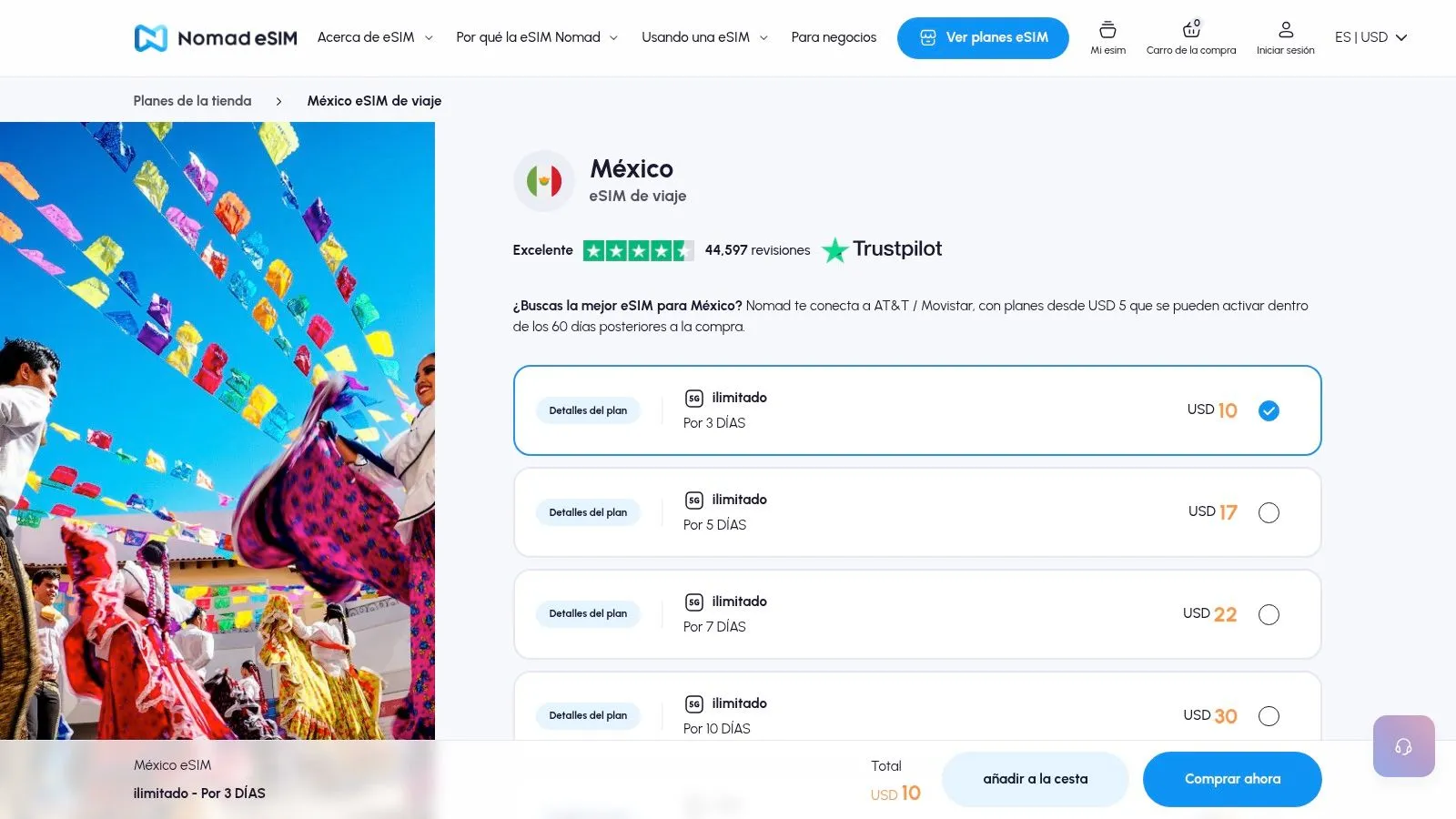
Nomad is a strong fit for travelers who want the local network partners stated clearly before purchase. Its Mexico plans list AT&T and Movistar and combine fixed allowances from 1 GB to 20 GB with validity of up to 30 days. It also offers short-term unlimited day plans, giving travelers a choice between a known data pool and a day-based product. Current availability and terms appear on the Nomad Mexico eSIM page.
That structure works well for a mid-length holiday, especially when a traveler needs more than a small starter pack but doesn't want to pay for a broad unlimited proposition. A 10 GB or 20 GB fixed plan can suit navigation, messaging, bookings, social uploads, and moderate remote work, provided video streaming and sustained hotspot use remain controlled.
The important limitation is the word unlimited
Nomad's unlimited day plans throttle to 512 kbps after the daily high-speed allowance is used. That speed may remain adequate for basic messaging, but it can be restrictive for video calls, large uploads, or laptop work. Travelers choosing Nomad should therefore treat “unlimited” as continued access with a possible speed reduction, not as unrestricted high-speed data.
Tethering is supported, and app-based installation keeps setup simple. The ability to use more than one stated local network can also help when a traveler moves between cities or encounters uneven performance. Still, network availability depends on location, and the listed partners don't automatically guarantee the same experience in every region.
Nomad is best for a traveler who reads the plan rules carefully and values network disclosure over extras such as wallet rewards or unusually fast human support. For a more detailed way to match allowance and itinerary, travelers can use RedSim's plan-selection guidance as a comparison point.
4. Holafly
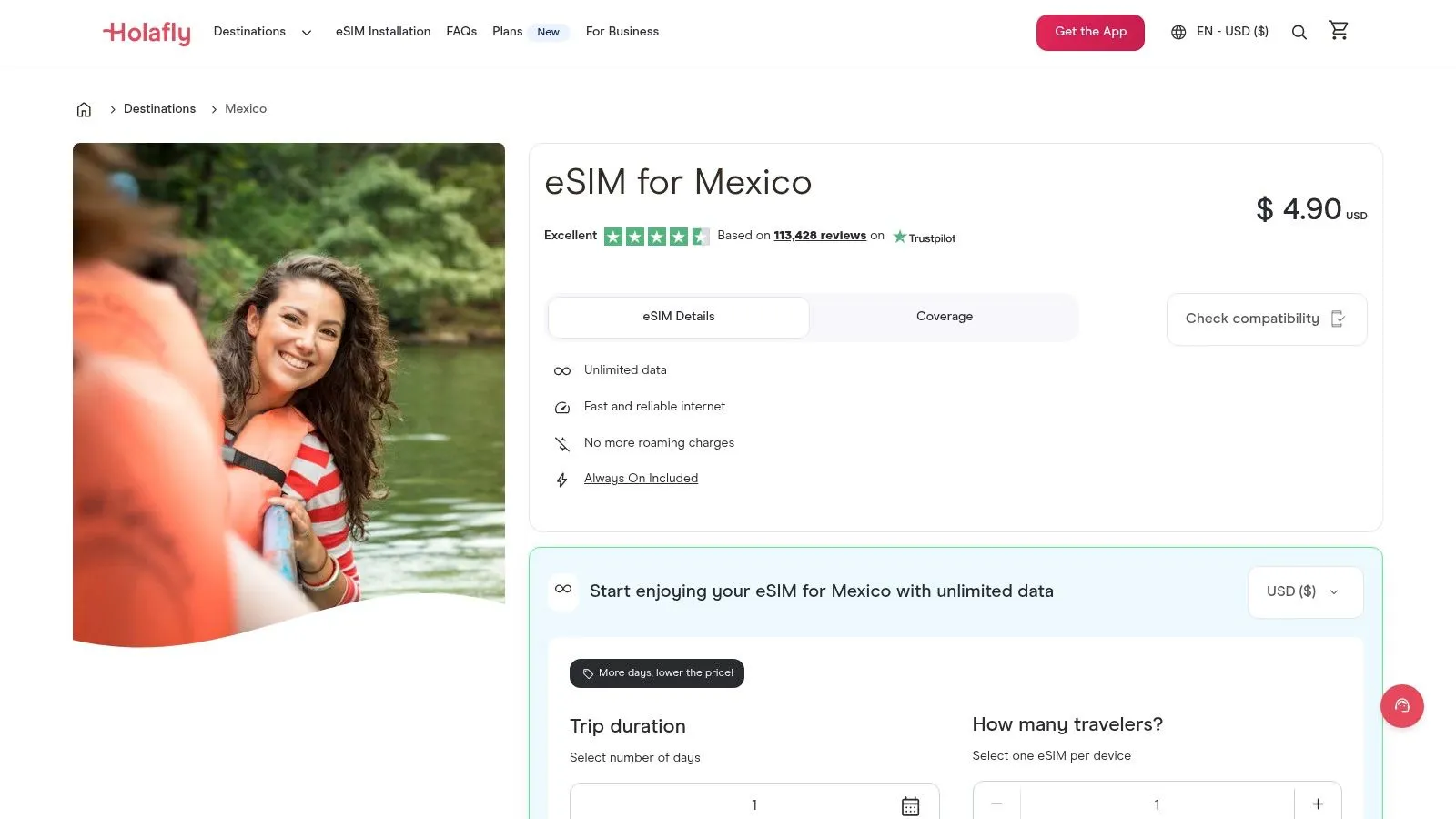
Holafly is designed for travelers who don't want to calculate a fixed data allowance. Its Mexico products use day-based durations from 3 to 30 days and present unlimited data as the central proposition. Installation is available through the app or QR code, and support is available around the clock through the provider's support channels. The Holafly Mexico eSIM page documents the plan structure and relevant coverage information.
That simplicity is useful for travelers who expect frequent maps, social media, video, or general browsing and would rather pay for a defined number of days than monitor gigabytes. It can also make plan selection easier for people who don't know their likely data consumption before departure.
Unlimited data doesn't mean unlimited hotspot
Holafly documents a hotspot allowance of 1 GB per day, even though the main eSIM data is marketed as unlimited. A traveler sharing data with a laptop or several family devices can reach that tethering limit quickly. Independent eSIM guidance also warns that some unlimited plans impose hotspot caps or reduce speeds after a daily allocation, so the headline label shouldn't be used as a substitute for reading tethering terms. This explanation of eSIM hotspot mechanics gives the relevant distinction.
Holafly's fair-use policies and coverage caveats also matter for remote destinations. It's a better fit for a phone-first traveler staying in established destinations than for a remote worker whose trip depends on unrestricted laptop sharing. Travelers crossing into the United States or Canada may also find North America plans convenient, but the exact coverage and hotspot terms should be checked before purchase.
Holafly's strength is uncomplicated day-based access. Its weakness is that a family or laptop user may discover that the most important part of the plan, hotspot sharing, is much narrower than the unlimited headline suggests.
5. Ubigi
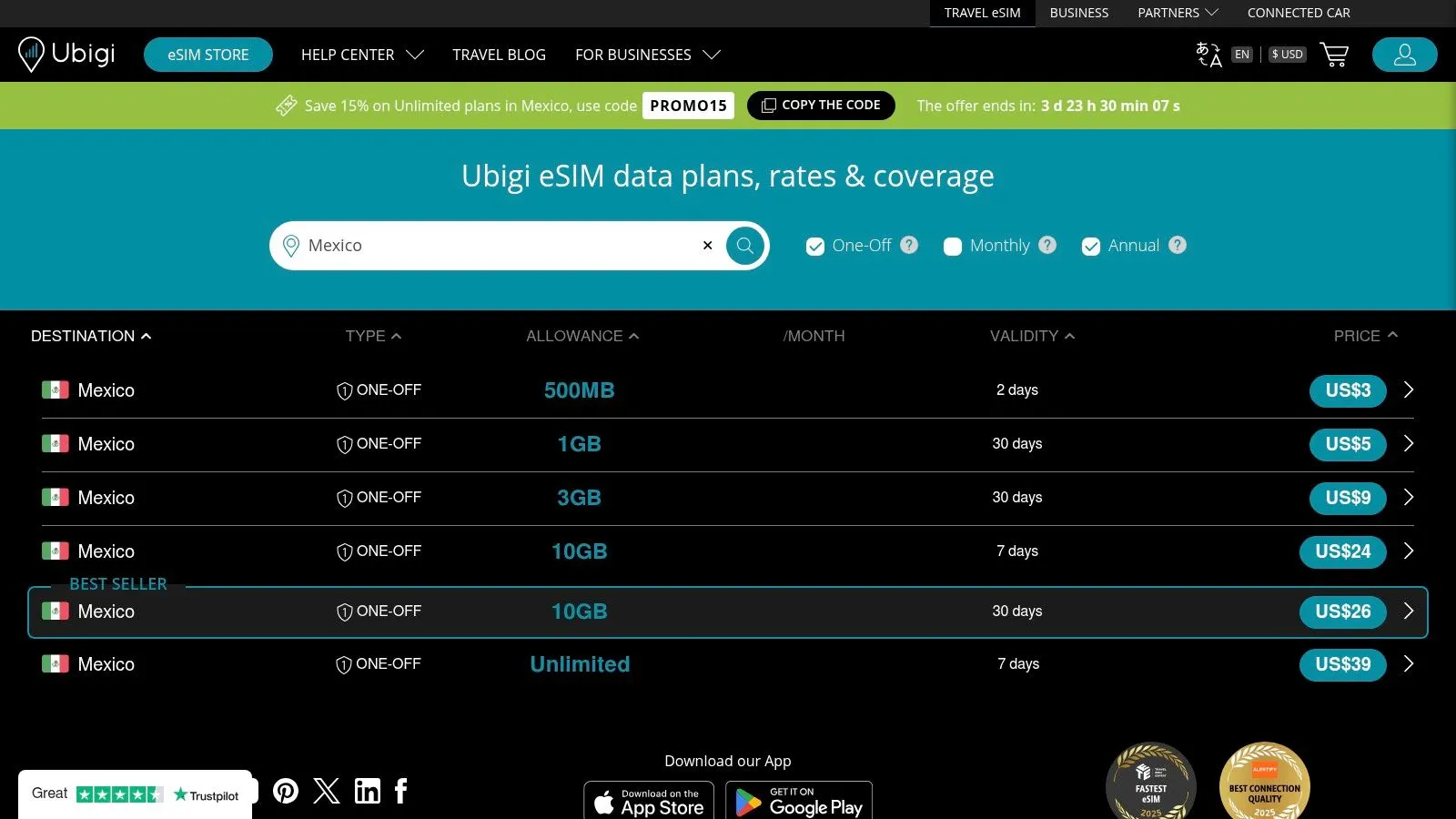
Ubigi, operated by Transatel within the NTT group, appeals to repeat travelers who value a stable account and clearly itemized plan pages. Its Mexico catalog includes several country data sizes, such as 1 GB for 30 days and 10 GB for 30 days, with installation through a QR code or app. Plan pages include update information, which helps travelers verify current terms before paying. The Ubigi Mexico data-plan page provides the current details.
The most useful feature is profile reuse. Travelers can keep the same eSIM and add data for future trips instead of downloading a new profile every time. That reduces setup friction for frequent flyers and creates a more consistent way to manage travel connectivity across separate journeys.
A dependable choice for repeat travel
Ubigi's country-plan format is easy to understand because the data allowance and validity are presented directly. It doesn't position a Mexico unlimited plan as the main attraction, so the service fits travelers who prefer a defined allowance and predictable usage rather than a day-based unlimited product.
The trade-off is less emphasis on family sharing and unlimited use. Any traveler planning regular laptop tethering should verify the current hotspot policy, because the ability to connect a laptop is not the same as having unlimited shared data. The broader eSIM market also includes unlimited-style plans that can throttle under fair-use conditions, so the plan's actual rules remain more important than the brand category.
Device compatibility is a critical check before purchase. Travelers can review RedSim's compatible-device guidance to confirm eSIM support and carrier unlocking before comparing Ubigi with other providers. Ubigi is particularly sensible for a business traveler who returns to Mexico, wants one reusable profile, and prefers a straightforward data catalog.
6. aloSIM
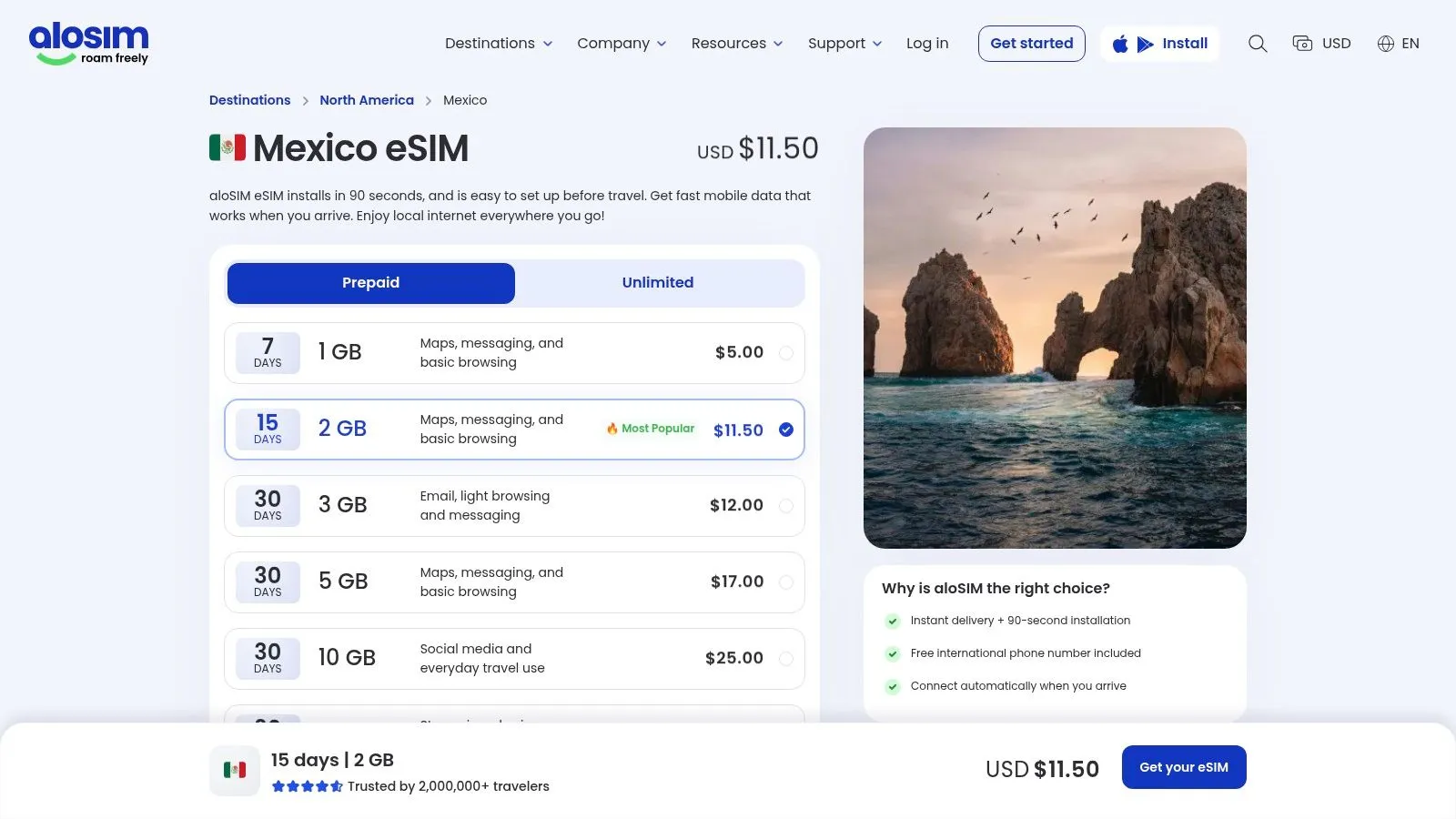
aloSIM targets travelers who want a consumer-friendly purchase flow and more than data alone. Mexico plans can be purchased through the website or app, with installation instructions designed for users who may be new to eSIMs. Plans include a free Hushed travel phone number for calls and texts, which gives aloSIM a useful distinction in a category where most travel eSIMs are data-only. Details are available on the aloSIM Mexico eSIM page.
The included travel number can help with verification, app-based communication, or calls where a data service alone isn't enough. It doesn't turn the eSIM into a conventional Mexican carrier line, so travelers should still review what the Hushed number supports and whether the number meets the requirements of a particular service.
Best for travelers who want a guided setup
aloSIM follows an “install once, use forever” approach, with top-ups available on the same eSIM. 24/7 live chat support and a money-back assurance add reassurance for travelers who worry about installation problems or unexpected plan issues.
The less convenient part is price visibility. Full plan details and current pricing may appear more prominently in the app or at checkout than on the public website. Network information is also summarized rather than exhaustively listed, so travelers planning a rural route should ask support about the intended destinations before purchase.
aloSIM fits a leisure traveler who values a clear install experience and an included travel number. It's less compelling for a technical buyer who wants extensive network disclosure, or for a family that needs a clearly stated, generous hotspot allowance.
7. GigSky
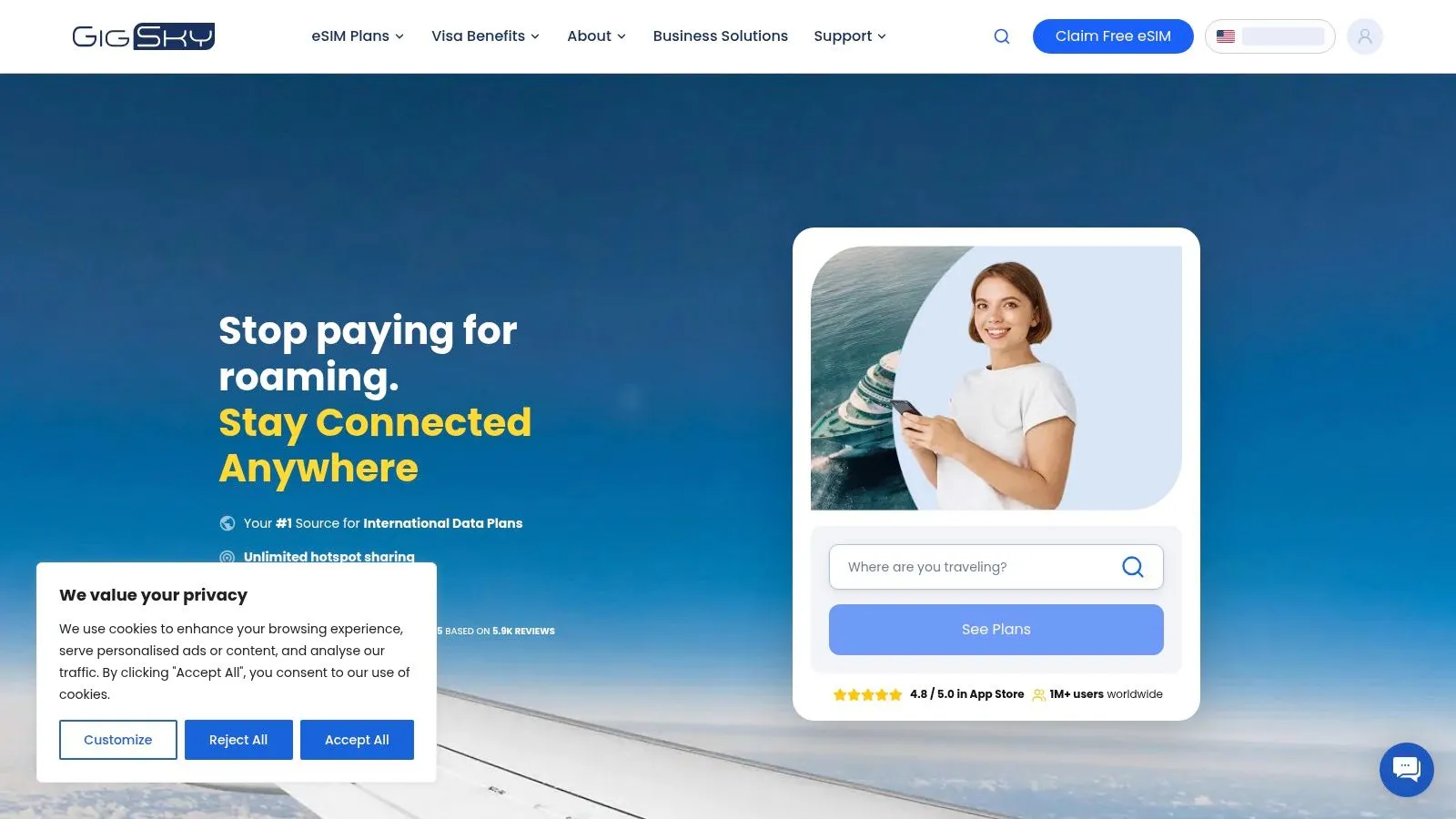
GigSky is a useful option for travelers whose itinerary crosses borders or includes a cruise. The provider offers country and regional eSIMs, including Mexico and North America products, with purchase and installation through the app or QR code. Its catalog also includes cruise connectivity, which gives it a different use case from providers focused only on land travel. Travelers can review the GigSky travel connectivity catalog before selecting a current Mexico or regional bundle.
The North America structure is particularly relevant for a trip that includes Mexico, the United States, and Canada. A regional plan can reduce the need to manage separate profiles at each border, but travelers should confirm that the selected plan includes every destination and understand when validity begins.
A cross-border specialist with a less visible Mexico price path
GigSky provides plan-management FAQs and an established app experience. Occasional starter-data promotions and partner benefits may improve the value, although promotional availability can change. Mexico-specific pricing is less prominent on the public website, so travelers may need to open the app to see the current bundles before making a direct comparison.
GigSky's service is data-only and doesn't include a local phone number. That's acceptable for travelers using WhatsApp or other internet calling services, but it won't replace a regular voice line for native calls and SMS.
For travelers comparing a regional product with a Mexico-only plan, RedSim's global eSIM option illustrates the broader category of multi-country provisioning. GigSky is strongest when border crossings or cruise segments matter more than the lowest Mexico-only entry price.
Top 7 eSIMs for Mexico, Comparison
| Provider | Implementation complexity | Resource requirements | Expected outcomes | Ideal use cases | Key advantages |
|---|---|---|---|---|---|
| RedSim | Very low, QR or in‑app 1‑click install | eSIM‑capable, carrier‑unlocked phone; app or QR; Stripe payments | Instant data in 200+ destinations; low prices; in‑app top‑ups; refunds for unused eSIMs | Short trips, multi‑country road trips, business travel, families using hotspot | Low cost, instant setup, wide coverage, 24/7 human WhatsApp support, wallet credit incentives |
| Airalo | Low, app or QR activation | eSIM device; Airalo app; supports in‑app top‑ups/renewals | Flexible small–mid data plans; broad local/regional/global catalog | Casual travelers, multi‑destination itineraries, budget users needing small data bundles | Large plan variety, low entry prices, global marketplace |
| Nomad | Low, app install with network info | eSIM device; app; tethering supported | Mid‑tier fixed data (1–20 GB) and short daily “unlimited” options (throttled) | Travelers wanting clear network partners and mid‑size allowances | Clear pricing and supported networks; option to switch networks |
| Holafly | Very low, simple app/QR unlimited plans | eSIM device; app or QR; accepts unlimited day‑based plans (hotspot cap) | Straightforward day‑based unlimited data with 1 GB/day hotspot cap and fair‑use limits | Users seeking uncomplicated unlimited data for short trips | Simple unlimited propositions, 24/7 support, clear day pricing |
| Ubigi (Transatel) | Low, QR or app; reusable profile | eSIM‑capable device; app or QR; reusable eSIM for top‑ups | Stable country plans with clear pricing; reuse and top‑up same profile | Repeat travelers wanting stability and predictable rates | Carrier‑backed (Transatel/NTT), reusable eSIM, transparent rate pages |
| aloSIM | Low, web or app install; bundled number | eSIM device; app/web checkout; includes Hushed number; live chat | Data plus a bundled travel phone number; refund guarantee; install‑once model | Travelers needing a temporary voice/SMS number for verification or calls | Included Hushed number, money‑back assurance, 24/7 live chat |
| GigSky | Low, app or QR activation | eSIM device; GigSky app to view bundles; regional options | Country and regional plans suitable for cross‑border use; occasional promos | Cross‑border travelers, cruises, multi‑country North America trips | Established brand, broad multi‑country coverage, cruise options |
Install, Test, and Travel With Confidence
The best eSIM for Mexico isn't universal. RedSim is the clearest recommendation for travelers prioritizing fast installation, hotspot sharing, in-app top-ups, refundable unactivated plans, and responsive human support. Airalo suits travelers who want a large marketplace, Nomad suits buyers who value stated network partners and fixed data choices, Holafly suits phone-first users who prefer day-based unlimited plans, Ubigi suits repeat travelers who want a reusable profile, aloSIM suits travelers who want a guided experience and travel number, and GigSky suits cross-border or cruise itineraries.
Network choice deserves more attention than brand recognition. Independent testing reported Telcel as Mexico's fastest nationwide mobile provider, with a median download speed of 80.6 Mbps across technologies in the second half of 2025 and 212.68 Mbps on 5G. OpenSignal's Mexico reporting also placed Telcel first for 5G download speed at 180.7 Mbps and gave it a coverage score of 8.8 out of 10. The OpenSignal Mexico mobile-network report supports the practical conclusion that travelers should check which local network an eSIM can access, especially outside major city centers.
Usage planning matters too. Mexico's median mobile download speed rose from 33.10 Mbps at the start of 2025 to 45.21 Mbps by the end of that year, while 97.7% of mobile connections were broadband-capable, according to DataReportal's Digital 2025 Mexico report. Those figures don't determine how many gigabytes an individual needs, but they support a sensible distinction: maps, messages, ride-hailing, and light work can fit a modest plan, while hotspot use, video calls, and media uploads justify more data.
A reliable setup sequence
- Check the device first: Confirm eSIM support and carrier locking before buying. A compatible phone may still reject a profile if another carrier has locked it.
- Choose the plan by itinerary: Match the allowance and validity to city travel, road trips, remote work, family sharing, or border crossings. Read hotspot and throttling rules separately from the headline data description.
- Install before departure: Use the QR code or the provider's app while connected to reliable Wi-Fi. Keep the installation email available until the profile works.
- Select the correct data line: Set the travel eSIM as the mobile-data line. Keep the primary SIM available for calls and SMS, but disable data roaming on the primary line to avoid accidental charges.
- Enable required roaming: Some travel eSIMs require data roaming to be enabled on the travel profile. Follow the provider's instructions, not a generic phone setting guide.
- Test the profile: Confirm that the eSIM appears in mobile settings and that the phone can select a supported network. Testing before the airport removes one source of arrival stress.
If the QR email is missing, check spam, search the purchase address, and open the provider app if the account supports in-app installation. If installation fails, confirm that the phone is free of carrier restrictions, remove any duplicate pending profile only after checking support instructions, restart the device, and try a stable Wi-Fi connection.
No data after landing usually points to the wrong data line, disabled data roaming on the travel eSIM, an incorrect access-point setting, or a network-selection problem. Hotspot failures can result from a plan restriction, a daily tethering cap, or a device setting. If the allowance is depleted, use an in-app top-up where available rather than deleting the profile.
FAQs
Are Mexico travel eSIMs data-only?
Most are. They provide mobile internet for maps, messaging apps, browsing, and internet calls, but they don't automatically provide a native Mexican phone number for ordinary voice calls and SMS. aloSIM is notable for including a Hushed travel number with its plans, but the exact calling and texting conditions should be checked before purchase.
How does hotspot data work?
A hotspot shares the eSIM's allowance with a laptop, tablet, or another phone. Every connected device draws from the same pool, rather than receiving a separate allowance. RedSim supports tethering, but heavy sharing can consume a fixed plan much faster than phone-only use.
Does unlimited mean unrestricted?
No. Nomad's unlimited day plans throttle to 512 kbps after the daily high-speed allowance, while Holafly documents a 1 GB per day hotspot allowance. Other providers may apply fair-use rules, so travelers should inspect the high-speed, tethering, and throttling terms before paying.
How long does a Mexico eSIM remain valid?
Validity depends on the product. The options compared here range from short day-based plans to fixed-data plans with validity of up to 30 days. Travelers should check whether validity begins at installation, activation, or the first connection to a supported Mexican network.
Can travelers top up without reinstalling?
Several providers support in-app top-ups on the existing profile. RedSim adds data to an active eSIM without issuing a new QR code, and Ubigi supports reuse of the same eSIM for future trips. The exact top-up options and expiry rules vary by provider.
Can an unused eSIM be refunded?
Refund policies commonly distinguish between unused and activated plans. One documented policy offers a full refund when the eSIM hasn't been activated, while activated or used plans generally aren't refundable. The published travel eSIM refund policy shows why travelers should check the terms before installation.
Which option works best for multi-country travel?
GigSky is well suited to cross-border and cruise itineraries, while Airalo, RedSim, and other providers offer regional or global structures. The right choice depends on whether the plan covers every country, how validity is calculated, and whether the same profile can remain active across borders.
When should support be contacted?
Support should be contacted before deleting a failed profile or purchasing a replacement. The provider should receive the phone model, destination, eSIM status, selected data line, network setting, and any error message. That information helps distinguish an activation problem from a coverage limitation or depleted allowance.
RedSim combines Mexico data plans with QR or in-app installation, hotspot support, real-time usage tracking, top-ups, and support for travelers who need predictable connectivity after landing. Travelers comparing the best eSIM for Mexico can visit RedSim to check device compatibility, current plan terms, and the option that fits the trip.